Adams Earthworx is a Brooksville, FL outfit doing bushhogging, land clearing and excavating in Hernando, Pasco, Citrus and Marion counties. If your field has grown up past what a regular mower handles, the first question is whether it needs a first cut or a maintenance cut. A maintenance cut mows ground that is still open. A first cut opens up ground that has closed in. Sam Adams, owner-operator, runs the machines himself.
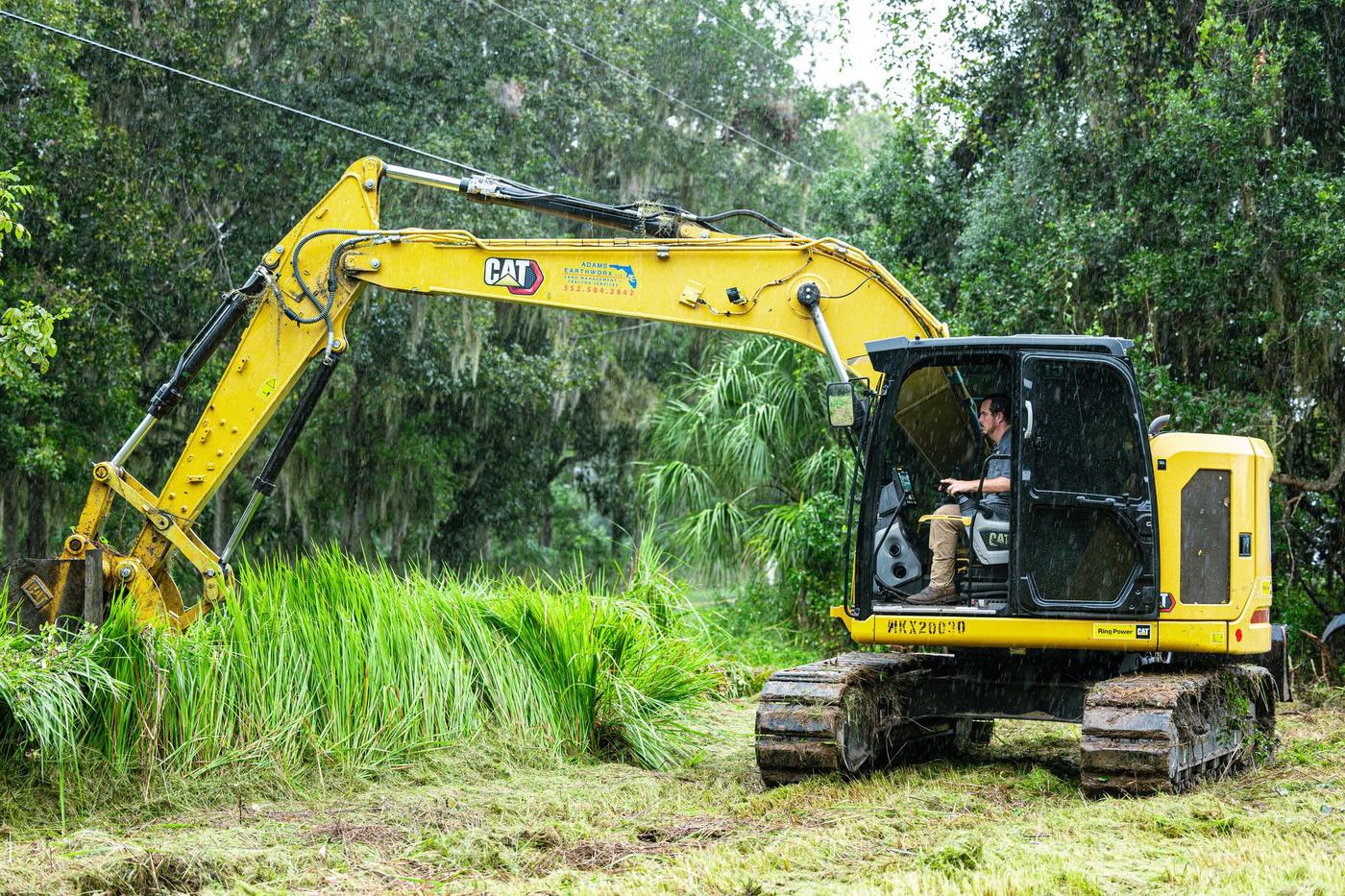
First cut or maintenance cut: they are different jobs
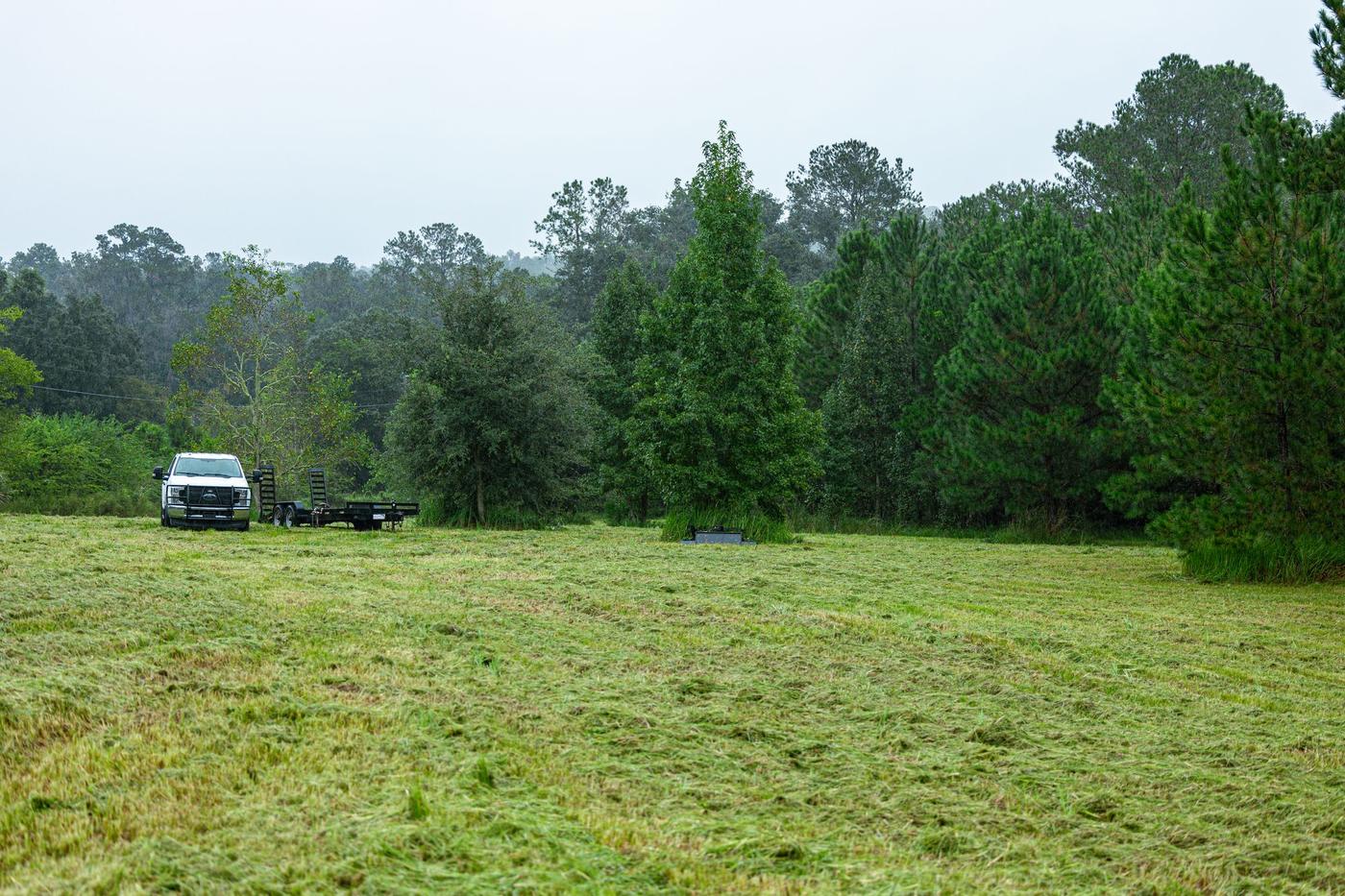
A maintenance cut is a mow on ground that is already open. The grass is tall, but the field is still a field. You can see the ground, you know where the fence is, and nothing woody has taken hold. A bush hog behind a tractor does that job and nothing else is needed.
A first cut is a reclaim. The field got away from you, and now it holds vines, palmetto, small brush and old piles that the grass has been covering for years. Nobody knows what is in there, including you. The bush hog is still part of the job, but it is not the first machine in. Something has to open the field up so the mower can run safely.
One line to remember: a maintenance cut keeps a field open, and a first cut makes it open. Our bushhogging page covers the mowing service itself. This page is about telling which one you need.
What you can see from the fence line
You do not need to wade in to make the call. Stand at the gate or the road and look at the field. These are the signs, and each one points a direction.
- You can see the far fence. If the line of sight runs across the field, it is probably a maintenance cut. Tall grass and weeds alone are mowing work.
- Low clumps of fan-shaped palmetto fronds. A few scattered clumps are mowing work. Dense mats of palmetto across the field are a grapple job.
- Vines climbing the fence and the trees. Vines wrap a bush hog and they hide what is under them. They usually mean the field needs a pass with something that can pull.
- A dark line of brush along the edges. A brush line that has crept a few steps into the field every year is a first-cut sign. It will not lay down under a mower.
- Saplings with real trunks. Once the stems are thicker than a broom handle, you are past mowing. That starts to look like land clearing.
- Standing water or a dark, soft patch. Wet ground changes how the work gets done and when. Point it out in your photos.
What grown-up grass hides
Tall growth is a blanket. Under it can be old stumps, piles and wire, and a bush hog that hits one takes the damage. Here is what turns up on grown-up Florida pasture, and which tool deals with it.
- Old stumps. A stump cut flush years ago is invisible in tall grass. A bush hog that hits one can bend or break the mower’s blades or stop the tractor cold. These get found on the walk, and the excavator takes them out if they are in the way.
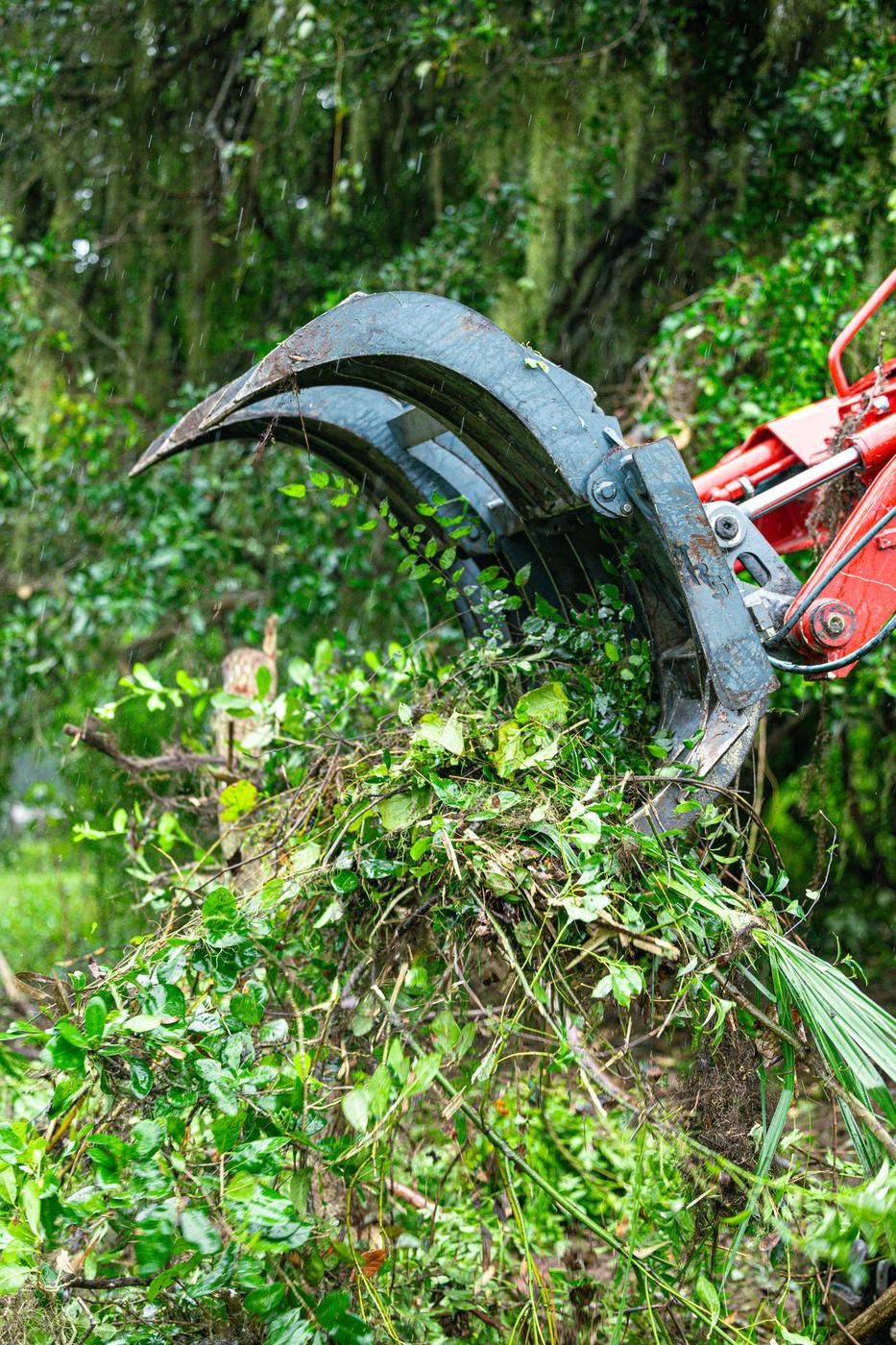
- Piled debris. Old brush piles, fence wire, cut limbs, a pallet, a dead appliance. The grapple, a big steel claw on the machine that grabs and pulls brush, picks it up before the mower sees it.
- Vines and dense palmetto. Dense vine tangles and thick palmetto mats get pulled by the grapple or excavator. Light, scattered palmetto the bush hog can cut.
- Brush lines and small trees. The excavator works them from the edge in. What cannot be mowed gets pushed, piled and hauled, which is why we run our own dump truck.
- Soft or wet spots. Heavy machines do not belong on ground that will not hold them. Sam reads those spots on the walk and works around them or waits.
If you have an idea what is in there, tell Sam. If you do not, say that and he will look.
How Sam runs a grown-up field, in order
The order matters more than any single machine. Get it backwards and you break equipment or leave a mess.
1. Walk it
Sam walks the field before anything starts. He looks for stumps, piles, wire, wet spots and the edge of the brush. Grass hides these things from the tractor seat, so Sam finds them on foot first.
2. Grapple or excavator pass
Brush lines, vines and dense palmetto come out first with the grapple or the excavator.
3. Bush hog
Once the field is open, the tractor and bush hog go through and cut it down to a clean, even surface.
4. Pile or haul
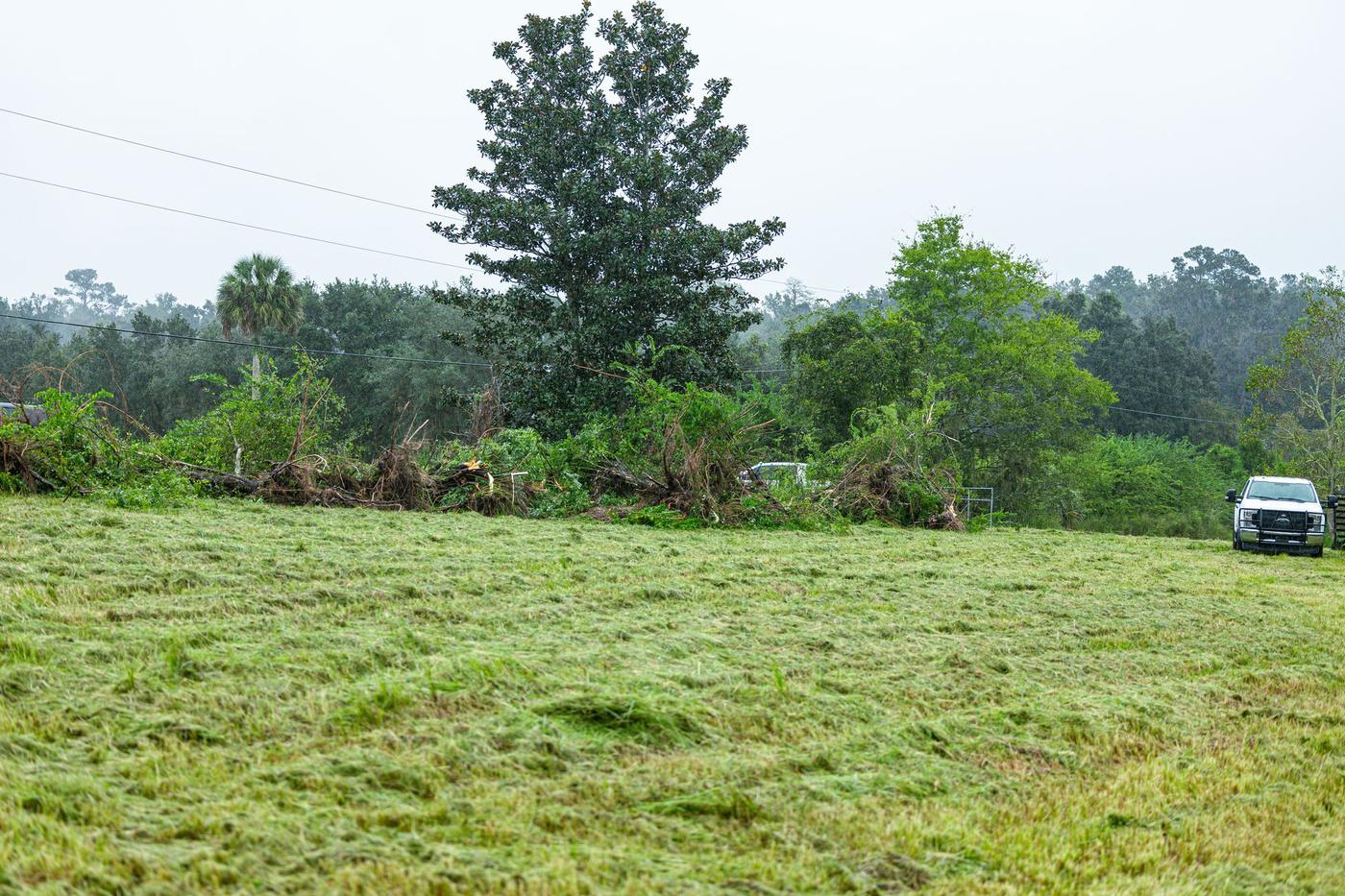
Whatever came out gets piled or loaded and hauled in the Adams dump truck. Which one depends on the job and what you want left behind.
Who this is for
You just bought acreage in Marion or Citrus County
The listing said pasture, and what you are looking at is waist-high brush. You need to know whether this is a mowing day or a reclaim before you plan anything else. Our Ocala bushhogging and Inverness bushhogging pages cover those areas.
You inherited a field in Pasco County
Nobody has worked it in years, and the family is not sure where the fence runs. A walk with Sam sorts out the line and the junk. The Dade City bushhogging page covers that area.
You let it go through a wet summer
The grass got ahead of you, and now the regular mower will not touch it. Often that is still a maintenance cut, but Sam will tell you from the photos.
You want horses or cattle back on it
Livestock need a field with no wire, no junk and no hidden holes. Sorting that out comes first, before the animals go in.
Dry season, wet season, and how often after
Dry ground is easier on equipment, so first cuts tend to go smoother when the field is drier. But growth in Florida does not stop, and a field can be worked when the ground allows it. Wet spots may mean waiting or working around them.
After a first cut, the question is how often to mow. There is no one answer. It depends on the field, the grass, the amount of rain it gets and what you want it to look like. A pasture that holds cattle needs a different rhythm than a lot you only want to keep walkable. A general rule: mow before the growth gets thick enough to hide things again. Waiting until it is back to chest high turns a maintenance cut into a second first cut.
What happens when you call
Text photos to (352) 584-2842. Sam replies the same day. He looks at what you sent and tells you which job it looks like and whether it needs a walk. Estimates are free. The man who answers the phone is the man on the machine.
Send three things. One wide photo from the gate or the road that shows the whole field. One close-up of the thickest growth. And a note on where the gate or access is, so he knows how the machines get in. If there is a spot you are worried about, such as a wet corner, an old pile or a fence line, take a photo of that too.
Permits and what to check first
Some land has rules that apply to it, such as wetlands, protected trees or county requirements. Check with your county first, and bring it up when Sam walks the property. It is easier to know before the machines show up than after.
Related work: bushhogging · land clearing · excavating · bushhogging in Ocala · bushhogging in Dade City · bushhogging in Inverness · loader and dirt work.
QUESTIONS
My field has grown up over a couple of years. Can a bush hog just knock it down?
A bush hog can knock it down only when the growth is grass and weeds and you can still see across the field. If there are vines, dense palmetto, brush lines or saplings, Adams Earthworx runs a grapple or excavator pass first and then the bush hog. Text Sam a photo at (352) 584-2842 and he will tell you which it is.
How often should pasture be bush hogged once it is cleared?
Mow again before the growth gets thick enough to hide stumps and debris. How often that lands depends on the field, the rain and what the land is used for, so Sam does not promise a calendar. A cattle pasture and a lot you only want walkable run on different rhythms.
What is hiding in tall grass that can damage equipment?
Old stumps, piled debris, fence wire and soft ground are what damage equipment in tall grass. Stumps cut flush years ago are the worst, because the mower hits them without warning. That is why Sam walks a grown-up field before he cuts it.
When does a field need brush and vines pulled before mowing?
A field needs brush and vines pulled when it has vines, dense palmetto, brush lines or stems thicker than a broom handle. Those do not lay down under a mower, and vines wrap the blades. The grapple or excavator opens the field, then the bush hog finishes it.
What should I send Sam so he can tell me what the job is?
Send Sam one wide photo of the whole field, one close-up of the thickest growth, and a note on where the gate is. Add a photo of any wet spot, pile or fence line you are worried about. Text it to (352) 584-2842 and Sam replies the same day.
Is it better to cut overgrown land in the dry season or any time?
Overgrown land can be cut most times of year, but dry ground is easier on the machines. Wet ground that will not hold equipment is the limit, and Sam works around those spots or waits on them. Tell him about any soggy areas when you text Adams Earthworx at (352) 584-2842.
How do I keep a field from growing back to the same point?
Mow before the growth gets thick enough to hide things again. A field cut on a regular rhythm stays a maintenance job, and one skipped for a couple of seasons turns back into a first cut. Sam can suggest a rhythm for your field once he has seen it.
Do you handle the brush and debris that comes out?
Yes, the brush and debris that comes out gets piled on site or loaded and hauled in the Adams Earthworx dump truck. Which one depends on what you want left behind. Work that out with Sam before the job starts.
Text a wide photo and a close-up of your field to (352) 584-2842.