A pond is two jobs at once: a hole that has to hold water, and a pile of dirt that has to end up somewhere useful. Adams Earthworx is based in Brooksville, FL and digs new ponds and digs out old ones across Hernando, Pasco, Citrus and Marion counties, with its own excavator and dump truck. Sam Adams, the owner, is the one in the seat. Below is the whole pond job, from picking the spot to the last load of dirt, plus who may need to sign off before the bucket goes in.
New pond, or the old one dug out
Those are two different jobs, and it helps to know which one you have before a machine rolls through the gate.
A new pond starts with the spot. The best place is usually where water already wants to sit: a low corner, a wet-weather dip, ground that stays soggy after a summer storm. Keep it clear of the septic drainfield, the well and the property line. How far away is not a number to guess at; ask your septic installer or builder what distance they need, and ask the county.
A dig-out is an old pond that has slowly filled itself in. Leaves, silt washed off the pasture, dead growth and black muck settle on the bottom year after year. The pond holds less, warms up faster, and goes shallow or dry earlier every spring. Digging it out means pulling that material off the bottom and the sides, then reshaping the edge so it is not a steep lip of mud.
Both use the same excavator. What changes is the mix: fresh ground on one, years of buildup scooped out on the other.
Why a low pond is the time to dig it out
A pond that is low or dry is easier to work than one that is full. The excavator can sit on firmer ground closer in and reach the real bottom instead of fishing blind through water and soup. Muck that comes out half dry loads cleaner, spreads easier, and stays in the truck bed on the way down the road.
If you are watching your pond shrink in a dry spell, check Hernando County’s site for any water-shortage restrictions before you plan around the water. Dry weather does not change whether a pond needs sign-off. That question is the same in any season, and it is covered further down.
How the digging goes
- Lines get marked first. Florida wants a Sunshine 811 request placed ahead of any digging, so power, phone and water lines get flagged first. Older places sometimes have lines nobody wrote down, like a pipe running out to a trough. Mention those too.
- A way in for two machines. The excavator and the dump truck both have to reach the pond edge. Gate width, soft ground, a ditch to cross and low limbs all matter. If the bank has grown over with brush and vines, that comes off first; see land clearing.
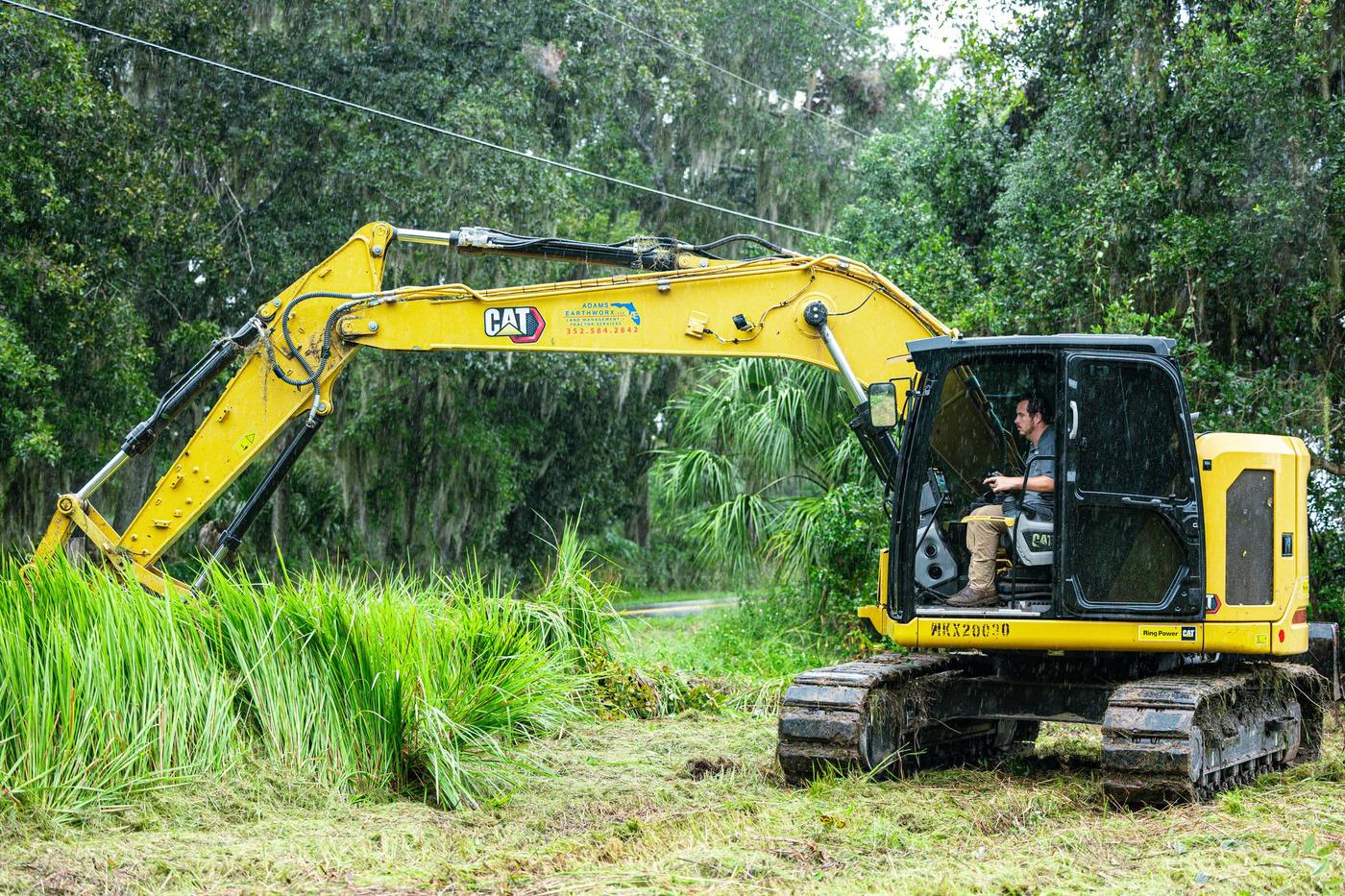
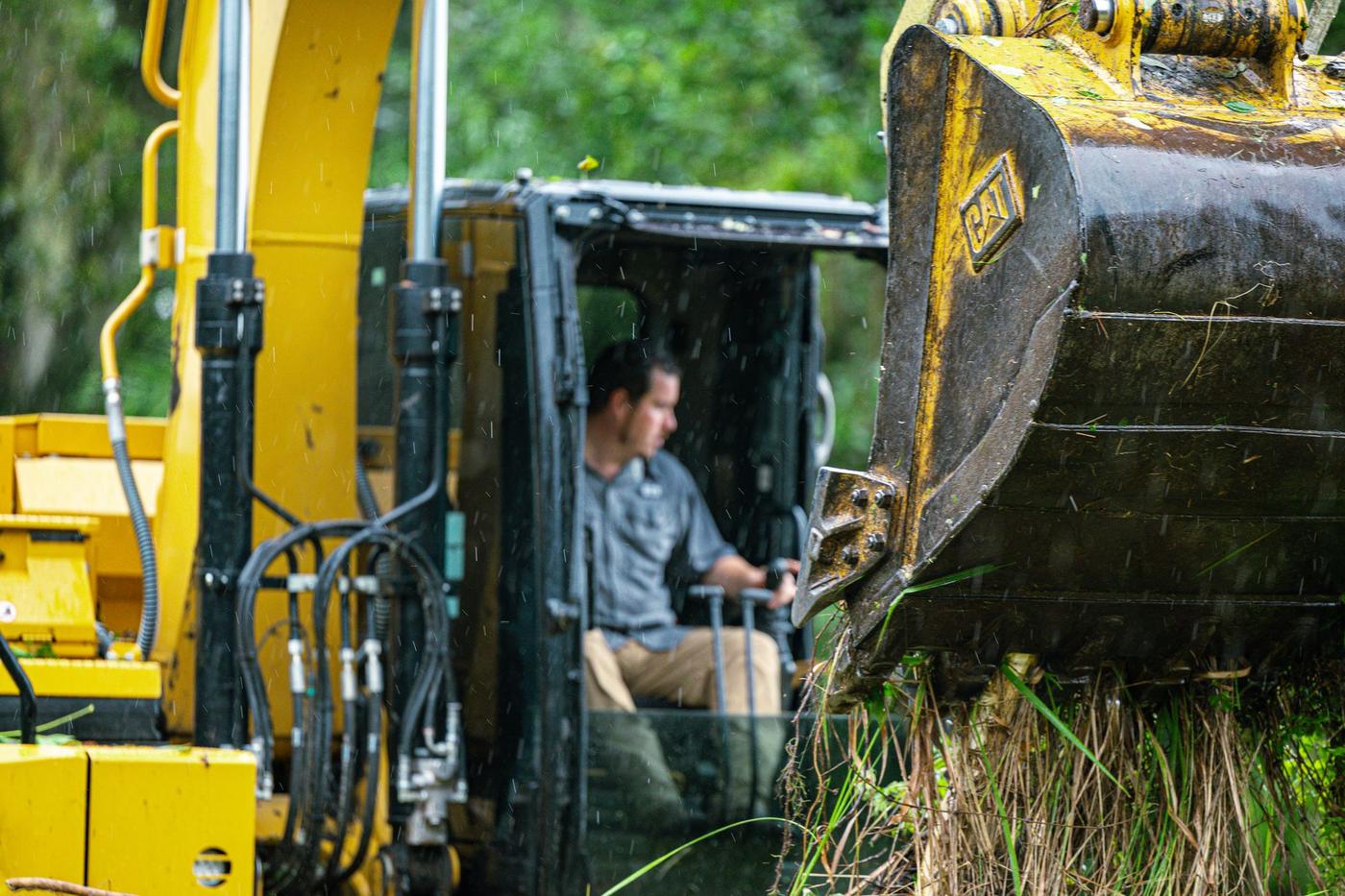
- Digging from the bank. The excavator works from the edge and pulls the bottom out toward itself, loading the dirt that comes out (spoil) into the truck or setting it where it is going to be spread.
- Sloped sides, not straight walls. Straight walls cave in, and a calf or a dog that slips in cannot climb back out. The sides get shaped gentle enough to hold up and to walk out of. How gentle depends on the ground, and Sam sets it on site.
- Watching what comes up. Sand, clay, muck or rock: what the bucket brings up as the hole gets deeper decides what the spoil is good for and how far down it makes sense to go.
- A shaped top edge. The ground around the rim gets shaped so rain runs toward the pond in a sheet instead of cutting gullies into the bank.
One thing nobody can honestly promise up front is that a pond will hold water. That comes down to the ground. Sandy ground can drain, and the level follows the weather and the water table more than the digging.
How deep, and what's underneath
There is no single right depth. It depends on what the pond is for, how big it is, what the soil is, and what sits under it. A pond for stock water, a pond for looks, and a hole dug mostly to get dirt out of the ground are three different targets.
Deeper is not automatically better here. On the Brooksville Ridge and other parts of the Nature Coast, limestone can sit close to the surface. Hitting rock, or getting near it, changes the job, and the district can have rules about how deep a pond sits over the limestone. If there is a chance rock is shallow on your land, it is worth having a soil-testing company, the kind builders use to test a lot before a slab, look before you settle on a depth.
Sam tells you what he sees once the digging starts. He will not hand you a depth before then, because the dirt has not told him yet.
Where the dirt goes
This is the part most people do not think about until the pile is sitting in the yard. A pond of any size turns out a lot of dirt, and it needs a plan before the first scoop so it gets handled once instead of twice.
- Spread and graded on the property. Smoothed out over a pasture or a low field so it drains and can be mowed, not left in a ridge along the bank. That is ordinary grading and site prep work.
- A berm or a low rise. Some of it can be shaped into a low rise around part of the pond, as long as it does not push water onto a neighbor or block a swale (a shallow drainage ditch) that drains the road.
- Toward a pad. Clean sand from the sides can sometimes go toward a building pad or a raised spot elsewhere, if your builder looks at it and says it suits them. Muck and anything organic never go under a pad. The full pad sequence is on the barndominium pad prep page.
- Hauled off. Whatever you do not want on the land goes out in the in-house dump truck, loaded by the same machine that dug it.
Bottom muck deserves its own word. It comes out black, wet and soft, full of leaves and rotted growth. It has to dry before it is good for anything, and it is better spread thin on pasture or garden ground than piled up or built on. A mound of wet muck can stay soft for a long time.
If the plan is to use pond dirt to raise ground and the property sits in a flood zone, check with your county before you do it. Hernando County’s floodplain page tells residents to always contact the Zoning Division for zoning and elevation requirements.
Who may need to sign off
Ponds can need sign-off from the water management district or the county. Check first, and bring it up when Sam walks the property. A few things worth knowing before you make that call:
- The district's trigger. The Southwest Florida Water Management District says an Environmental Resource Permit is required before beginning any construction activity that would affect wetlands, alter surface water flows, or contribute to water pollution. Digging a pond can touch more than one of those. The district also offers a pre-application meeting, which is the plain way to ask before you dig.
- Being a farm is not the whole answer. A UF/IFAS publication on agricultural exemptions notes that the exemption does not cover work whose main purpose is impounding water, in other words, holding water back on purpose. So a pond on a working farm may still need someone to look at it.
- Marion County is split. Part of it falls under the Southwest Florida water management district and part under the St. Johns River district. If your land is in Marion, confirm which one covers it before you call anyone.
- Wet ground means stop and ask. If the pond is next to a wetland, or the low spot you want dug stays wet most of the year, check with the district before any digging at all.
Adams Earthworx does the digging. The sign-off question sits between you and the agency, and it is far easier to answer before the hole exists than after.
Who calls about a pond
The stock pond that goes dry every spring
You run cattle or keep horses, and the pond they drink from gets shallower every year until it is a mud flat by April. It has silted in. Digging it out while it is low is the fix most owners are after.
The old pond that came with the land
You bought acreage with a pond on it, but the edge is buried in brush and vines and you cannot tell how big it really is. Clearing the bank comes first; see stumps, brush and grubbing after clearing. Then you can see what you are working with.
The corner that holds water anyway
One low corner of the property stays wet after every rain. Some owners want to fight that with fill; others would rather dig it out and let it be a pond. Either way, the sign-off question above comes before anything gets dug.
The owner who needs fill for a pad
You need dirt for a pad and wonder whether a pond on the same land could supply some of it. Maybe. It depends on whether the dirt is the right kind and whether your builder agrees, and it still needs the same check with the district or county first.
What happens when you text Sam
Start with photos sent to (352) 584-2842. Useful ones: the pond or the low spot from a couple of angles, the gate and the track a machine would use to get in, any soft ground on the way, and the place you would like the dirt to end up. Say whether it ever holds water year-round and whether it sits next to a wetland. If your builder or engineer already has the pond drawn on a plan, send that along with the photos.
Sam replies the same day. Then he walks it with you, looks at the ground, the way in and the edge, and talks through where the spoil goes and whether you should check with the district or county before anything starts. Estimates are free.
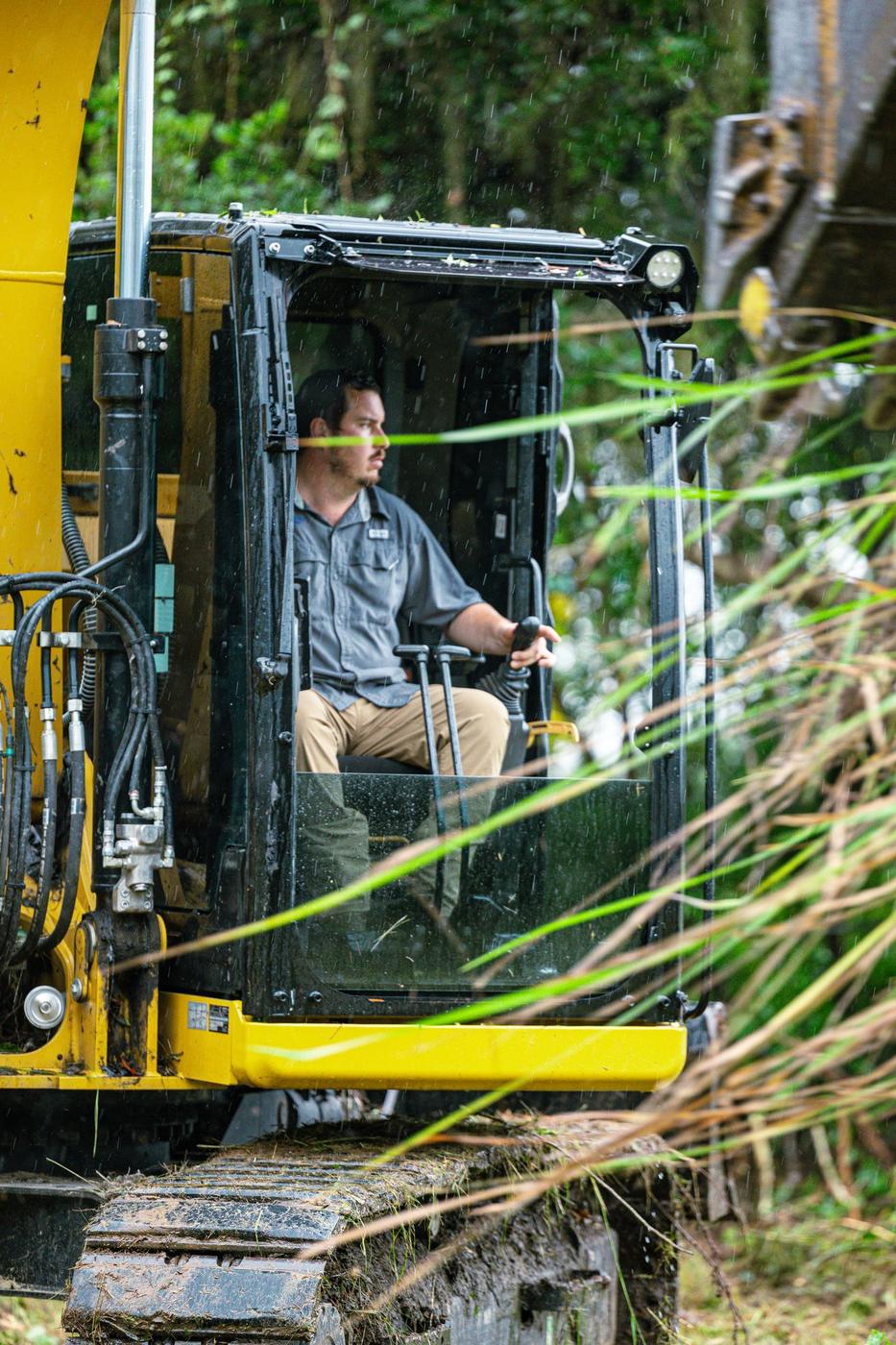
When the work is on, the excavator and the dump truck show up, and the man who walked the property is the man running the machine. As Ethan W. put it in a review: “Sam is extremely professional in his field and very knowledgeable.”
Related work: excavating · loader and dirt work · land clearing · grading and site prep.
QUESTIONS
Can you dig out my old pond and make it deeper?
Usually yes, by pulling the silt, muck and growth off the bottom and reshaping the sides so they hold up. The extra depth depends on the ground and what is under it, which Sam can judge once he starts digging. Nobody can promise it will hold more water afterward; that depends on the soil and the weather.
How deep should my pond be?
That depends on what the pond is for, how big it is, the soil, and how close rock sits to the surface. On parts of the Brooksville Ridge limestone can be shallow, so going deeper is not always the better choice. Where rock may be close, it is worth having a soil-testing company (the kind builders use to test a lot before a slab) check first.
Do I need a permit to dig a pond or dig out the one I have?
Sometimes, and it is worth checking before anyone digs. The Southwest Florida Water Management District requires an Environmental Resource Permit before work that would affect wetlands, alter surface water flows, or contribute to water pollution. UF/IFAS notes the agricultural exemption does not cover work mainly meant to impound water, and Marion County is split between the Southwest Florida and St. Johns River districts, so confirm which one covers your land. Bring it up when Sam walks the property.
What do you do with all the dirt that comes out of the pond?
It goes wherever you decide before digging starts: spread and graded on the property, shaped into a low berm, moved toward a pad if it is clean and your builder agrees, or loaded on the in-house dump truck and taken away. Wet bottom muck gets dried and spread thin, never built on. If you want to raise ground in a flood zone with it, talk to your county’s zoning office first.
Can the dirt from my pond be used for a house or barn pad?
Maybe, if it is clean sand and your builder says it suits them. Muck and anything with roots or leaves in it never go under a pad. The barndominium pad prep page covers how a pad gets built.
Is now a good time to dig, with my pond low or dry?
Yes, a low or dry pond is the easiest kind to dig out. The machine can reach the bottom from firmer ground, and the muck comes out drier. In a dry spell, check Hernando County’s site for any water-shortage restrictions before you plan around the water; dry weather does not change any sign-off question.
What should I send Sam so he can look at my pond?
Photos of the pond or low spot, the way in for a machine, and where you want the dirt to go. Add whether it holds water year-round and whether there is a wetland nearby. Text them to (352) 584-2842; Sam replies the same day, and estimates are free.
Pond gone shallow, or a wet corner you would rather see as a pond? Send photos to (352) 584-2842, or call Sam, and he will come walk it with you.