A barndominium kit shows up on a truck, and the slab crew shows up on a date. The ground has to be ready between those two. Adams Earthworx is Sam Adams’s outfit in Brooksville, FL: owner-operator, in business since 2016, with a Cat excavator, blade work and an in-house dump truck. Adams Earthworx serves Hernando, Pasco, Citrus and Marion counties from Brooksville, FL. This page walks through the pad work in the order it happens, so you know what to hand your builder and what to ask.
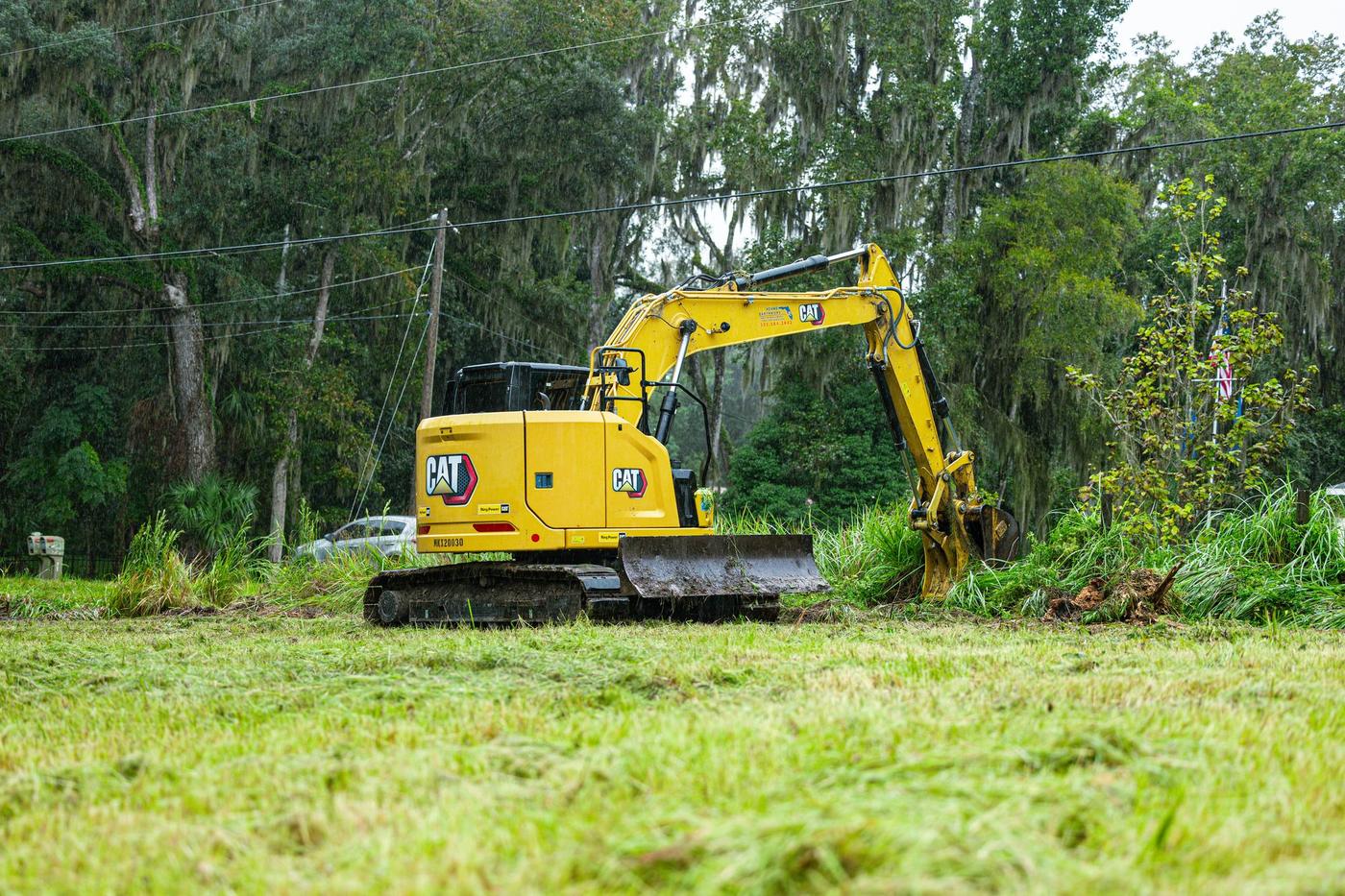
The order of work, start to finish
Most of the trouble on a barndo pad comes from doing the steps out of order. Fill goes down on top of roots. The crown gets cut before the low spot is filled. The truck cannot reach the pad because the driveway was an afterthought. Here is the usual order of pad work, as general practice. Your site and your builder’s plans can change the details.
1. Walk the site
Before any machine moves, walk the footprint and the ground around it. Note where the high side is, where water stands after rain, where the road is, and where the delivery truck will have to turn. Grass hides a lot of that from a machine seat.
2. Clear and grub the footprint
Brush, trees and stumps come out of the whole pad area, not just the spot where the walls will stand. Grubbing means pulling the roots, not cutting them flush. Roots left under a pad rot, and rotting roots leave voids. If the lot is thick, the land clearing comes first.
3. Strip the topsoil
The dark, organic top layer comes off. It is good for landscaping and bad under a slab. It can be pushed aside to use later around the building, or loaded out.
4. Cut the high side, fill the low side
The excavator and blade take dirt off the high end of the pad and carry it to the low end. Where the site needs more dirt than it has, clean fill gets trucked in. This is the excavating half of the job and the grading half starts right after it.
5. Build up in lifts and compact
Fill goes down in thin layers and gets packed before the next layer goes on. As a general rule, think roughly 8 to 12 inches per lift, but your builder’s spec controls. More on why in the questions below.
6. Crown and final grade
The surface gets shaped so water leaves the pad in every direction instead of settling against the building. This is where the grading and site prep work earns its keep.
7. Hand it over
Walk the finished pad with your builder before the slab crew arrives. The slab crew takes it from there.
How big the pad should be, compared to the building
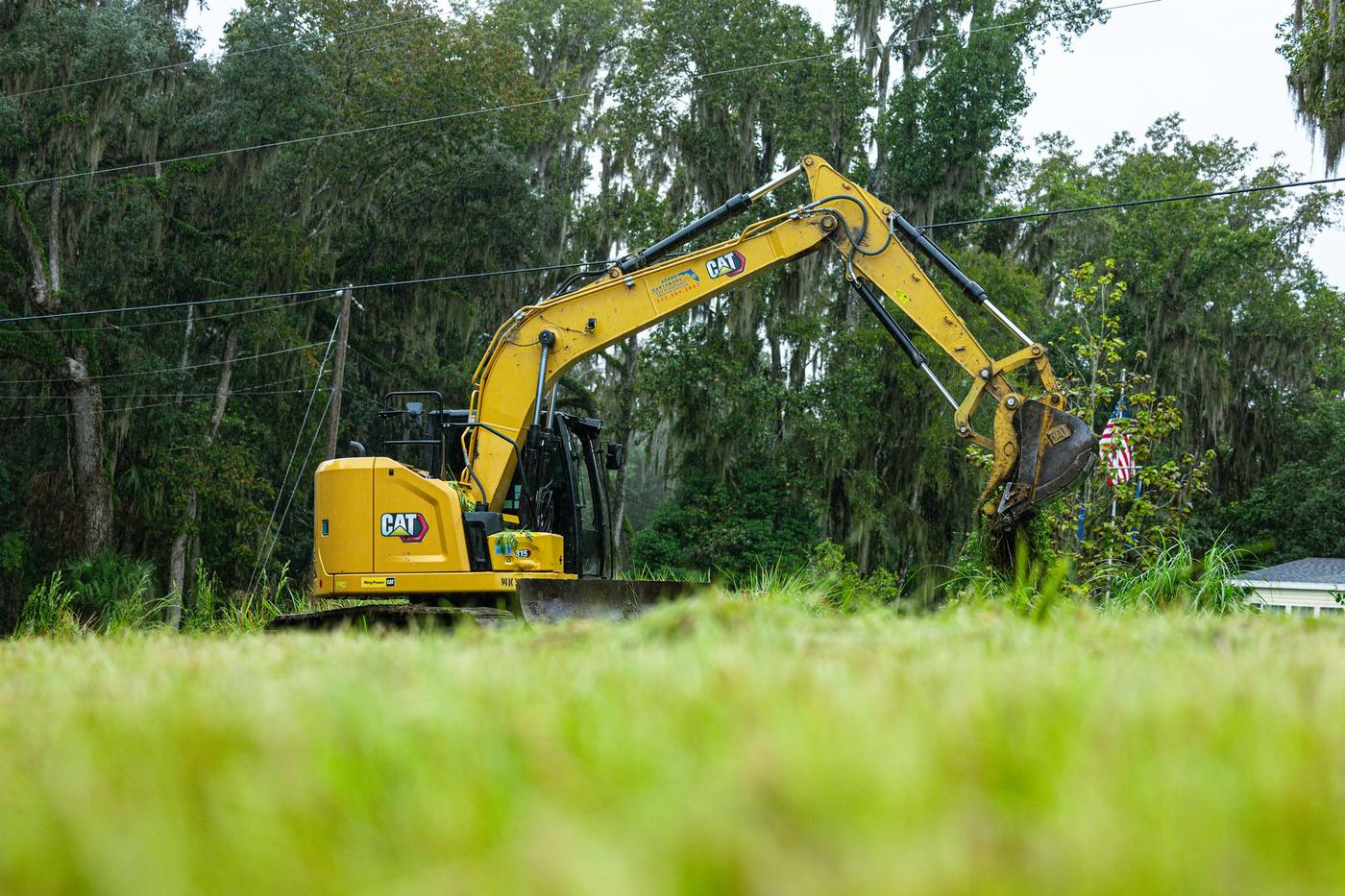
A pad is bigger than the building that sits on it. If you grade exactly to the footprint, you have no room to work. The slab crew needs space to set forms and walk around them. Equipment needs a flat place to sit. And the edge of the pad is where the slope starts down to natural ground, so if the pad ends at the wall the slope eats the corner.
So the pad runs out past the building on every side. How far is a question for your builder, because it depends on the slab plans and how they plan to set up. Ask them for a number in feet before anyone lays out the pad. A bigger pad means more fill and more compaction, so it is worth settling before the machines are on the lot.
Dirt from the site: reuse it or haul it
Whether the dirt you dig can be reused as fill depends on what it is. A simple rule of thumb: clean dirt stays, roots and organics go.
- Clean dirt from the high side. Soil with no roots, no stumps and no black organic mix gets pushed to the low side and used as fill.
- Roots, stumps and brush. These do not go in the pad. They get piled on site or loaded into the dump truck and hauled.
- The dark topsoil layer. It gets saved for around the building, or hauled if you have no use for it.
- More dirt than the site needs. If the cut makes extra, the extra can be hauled off. If the site is short, clean fill comes in.
Adams Earthworx runs its own dump truck, so digging and hauling can stay with the same outfit.
Water on flat Florida ground
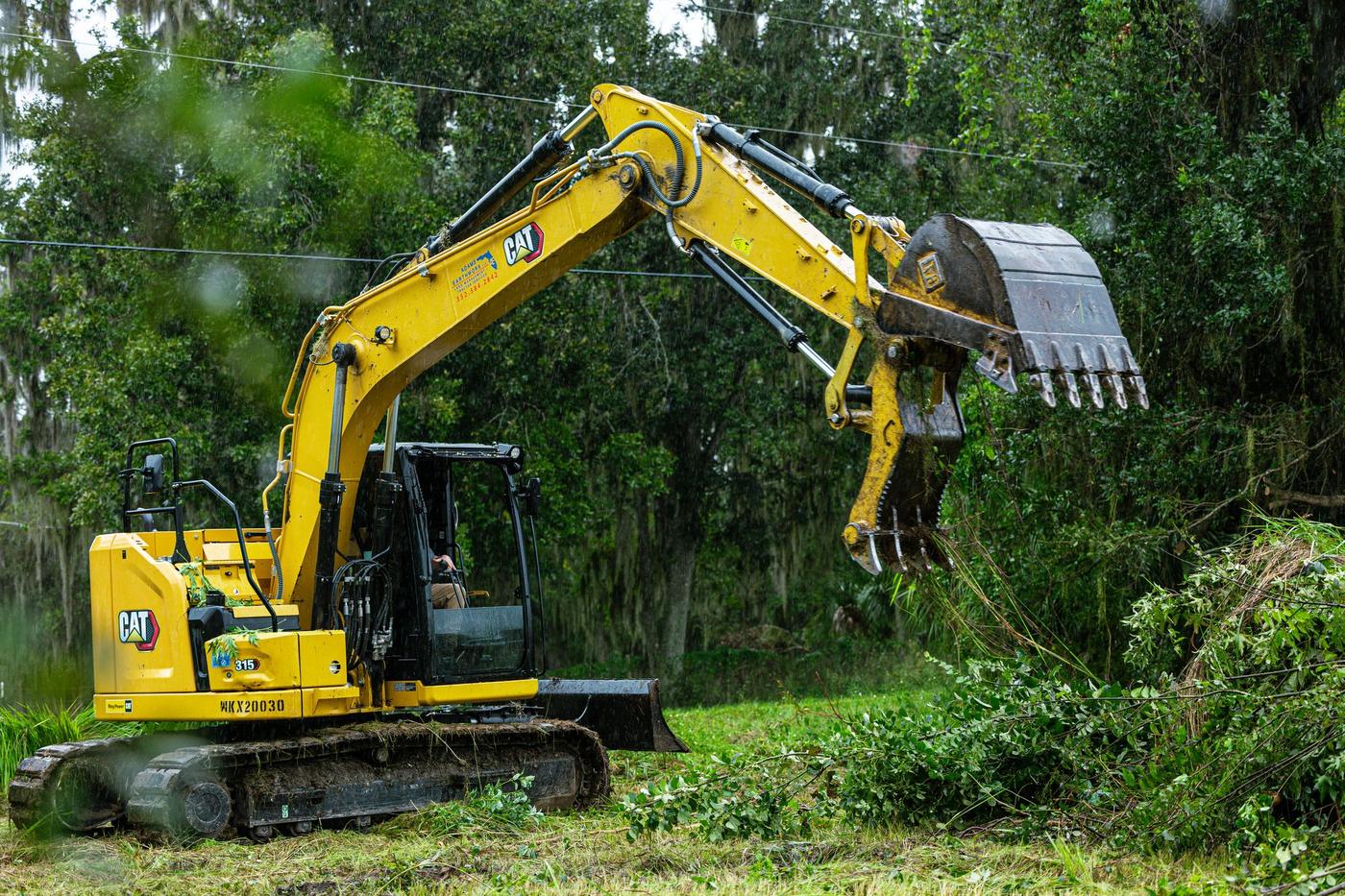
Much of the Nature Coast is flat enough that water has nowhere obvious to go. A pad that sits level in every direction holds a puddle against the slab. So the surface gets a crown: a slight rise toward the middle, falling away to the edges. Water runs off the sides, and the pad stays dry.
Where the water runs to matters as much as the crown. Look at the land around the pad, find where it already drains, and point the pad that way. If a low spot beside the pad will hold the runoff, that is a problem to deal with now, not after the walls are up.
Driveway and delivery truck access
Think about the delivery truck early. A metal-building kit and a concrete mixer are both heavy, and neither can turn on a soft path. The pad usually comes first, then a base for the drive, and the drive has to be done in time for the first big delivery. Know where the road is and which way the trucks come in before the pad is set.
If the drive is going to be built too, see our driveways and road base page. Our loader and dirt work covers the moving of material around the lot.
What to ask your builder and your county
Some of this is not dirt work, and it is not the excavator operator’s call. Slab and footing design, the finished elevation of the pad and how far the building has to sit from your property lines belong to your builder, the designer on your plans and your county. Check with your county first, and bring it up when Sam walks the property. A few questions to get answered:
- What finished height does the pad need to be? Get a number from the plans or the builder, and ask whether grade stakes will be set.
- How far past the building should the pad extend? Ask for feet on each side.
- What does the builder want for fill and compaction? Some builders and plans spell it out. Hand it to Sam.
- Where must the building sit on the lot? Setbacks and any county rules on this are for you and your county to confirm.
- Where does the delivery truck need to reach? Ask both the kit supplier and the slab crew.
Who this is for
You ordered a kit and the lot is still woods
Land has to be cleared before it is graded. Clearing and grading are both Adams Earthworx services, and clearing comes first. See grading in Dade City if you are in Pasco County.
You own a field in Marion County
Open ground is not the same as a ready pad. It still needs stripping, fill, compaction and a crown. Our Ocala grading page covers that area.
You are in Weeki Wachee or Inverness and the lot is low
Low ground means more fill and more attention to water. Send a photo of the low spot.
You are lining up builders and want to know what the dirt part involves
This page gives you the list. Knowing the order lets you compare builder bids on the same work.
A different job in the same order of work (clear, cut, grade): a Dade City subdivision entrance, 2026, cleared, cut, graded, based, and paved by one outfit.
What to text Sam
Text (352) 584-2842. Sam replies the same day and the estimate is free. For a fast read on a pad, send these.
- One wide photo. Shot from the road or the gate so the whole spot is in it.
- The building width and length. From your kit order or the plans.
- Where the road is. And which way trucks would come in.
- Where the low spots are. Or where water stands after a hard rain.
- Where the truck must reach. The spot the delivery truck has to get to.
A photo and the numbers give a first read. The pad layout itself gets settled on the ground, so walk the site with whoever is setting the pad before the machines move.
Related work: grading and site prep · grading in Dade City · grading in Ocala · excavating · loader and dirt work · driveways and road base · land clearing.
QUESTIONS
What has to be done to the ground before a barndominium slab can be poured?
The pad area has to be cleared, grubbed, stripped, filled where low, compacted and graded before a slab goes down. The usual order is: clear and pull roots, strip the topsoil, cut the high side, fill the low side in compacted lifts, then crown the surface. Adams Earthworx in Brooksville, FL does the land clearing, excavating and grading that make up that dirt work. Slab design itself is your builder’s call.
How far past the building walls should the pad extend?
The pad should run past the building on every side, and your builder should tell you by how many feet. The extra room is for forms, equipment and the sloped edge. Get that number before anyone lays out the pad.
Can the dirt I dig out of the site be reused as fill, or does it have to be hauled off?
Clean dirt can be reused as fill, and roots, stumps and organic material get hauled. Dirt from the high side with nothing in it moves to the low side. Roots and the dark topsoil layer do not go under the pad, and the Adams Earthworx dump truck can haul them off.
Why does fill get put down in layers and packed instead of dumped in one pile?
Fill goes down in layers because a deep pile packed from the top stays loose underneath and can settle later. Thin, compacted lifts are the usual way to get the full depth firm. Roughly 8 to 12 inches per lift is a general figure, and your builder’s spec controls.
How do I keep water from ponding against a barndo pad on flat Florida ground?
Crown the pad so it rises slightly in the middle and falls to the edges, and give the water somewhere to go. Look at where the land already drains and point the pad that way. A low spot next to the pad is worth fixing before the building goes up.
Does the pad need to be done before the driveway, and how does the delivery truck get in?
Usually the pad comes first and the drive base follows, but the drive has to be ready before the heavy deliveries. Know where the road is and where trucks must reach, and plan both together. Ask your kit supplier what their truck needs.
What do I send Sam to get a first read on a pad job?
Send one wide photo, the building width and length, where the road is, where the low spots are and where the delivery truck must reach. Text it to Adams Earthworx in Brooksville, FL at (352) 584-2842. Sam replies the same day and estimates are free.
Who handles permits and slab design on a barndominium pad?
Slab design belongs to your builder and the plans. Permits and setbacks are for you to confirm: check with your county first, and bring it up when Sam walks the property.
Text a wide photo of your building site and the building dimensions to (352) 584-2842 and Sam will tell you what the pad takes.