A manufactured home rolls in on wheels, in long sections, and gets set on piers by an installer. The dirt has one job before that day: give the home clean, dry ground to sit on and give the truck a way in. Adams Earthworx is Sam Adams, owner-operator out of Brooksville, FL since 2016, running his own Cat excavator, blade and dump truck on rural lots in Hernando, Pasco, Citrus and Marion. This page lays out what raw land needs, in what order, so the ground is ready when the installer calls.
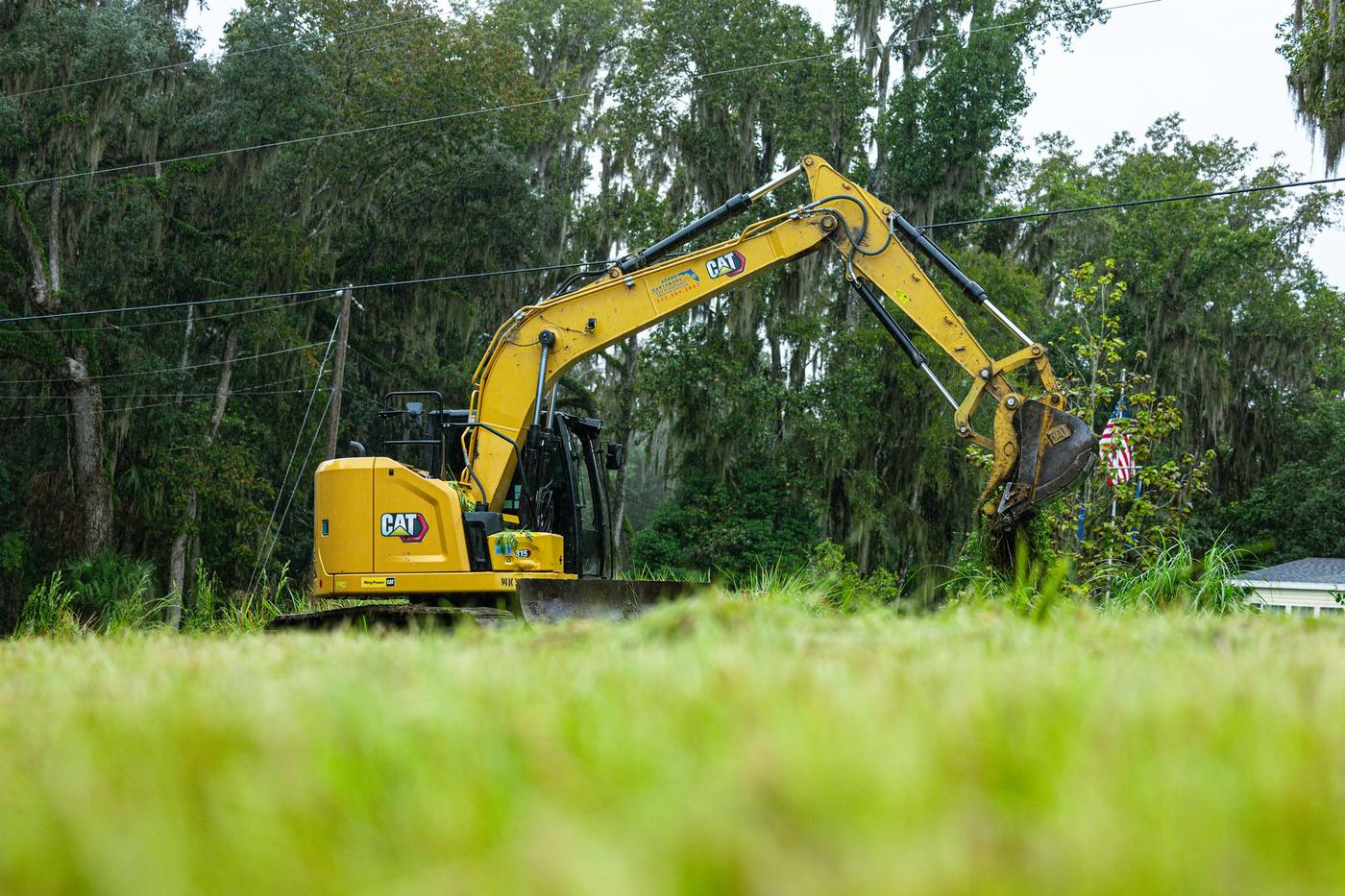
Three footprints and one way in
A manufactured-home lot comes down to three footprints you clear on your own ground, and one way in that the load has to travel. Get each one right and the set goes smooth. Miss one and the home sits on a trailer at the road while somebody figures it out.
- The home footprint. The rectangle the home will cover, plus room around it for the installer to work. This is where the ground rules are strictest.
- The septic and well area. Where the tank, the drainfield and the well will go. These get laid out by your septic installer and reviewed by the office that permits septic in your county, and they get laid out first.
- The drive and turnaround. The third footprint: the strip of your lot the home sits beside, built to hold the truck, with a spot wide enough to back, pull and swing a long load.
- The way in. The whole delivery route from the public road to the footprint, which a home section has to clear on the truck that pulls it, called a toter: width, turns, limbs overhead, soft ground and the ditch crossing.
The order that keeps trouble down: survey and site plan in hand, walk the lot with Sam, clear only what the plan needs, grub the home area (pull the stumps and roots out of the ground, not just cut them flush), shape the ground so water leaves, then build the drive and turnaround with road base. The piers and the anchors come after, and they are not dirt work.
What the state asks for under the home
Florida’s installation standards for manufactured homes (Rule 15C-1.0102, the site preparation part) spell out the ground under the home. In plain words: vegetation and organic material, stumps and roots included, come out from under it. Short grass is about the only exception. The area beneath and around the home gets graded and sloped so water won’t collect under the floor. And the piers go on stable soil or compacted fill.
That is grading and grubbing, and it has to be finished before the installer arrives. Your installer and the county inspector have the final word on what passes, so read the rule as the floor, not the whole list. Ask your installer what they want to see on the day they show up, and hand that to Sam.
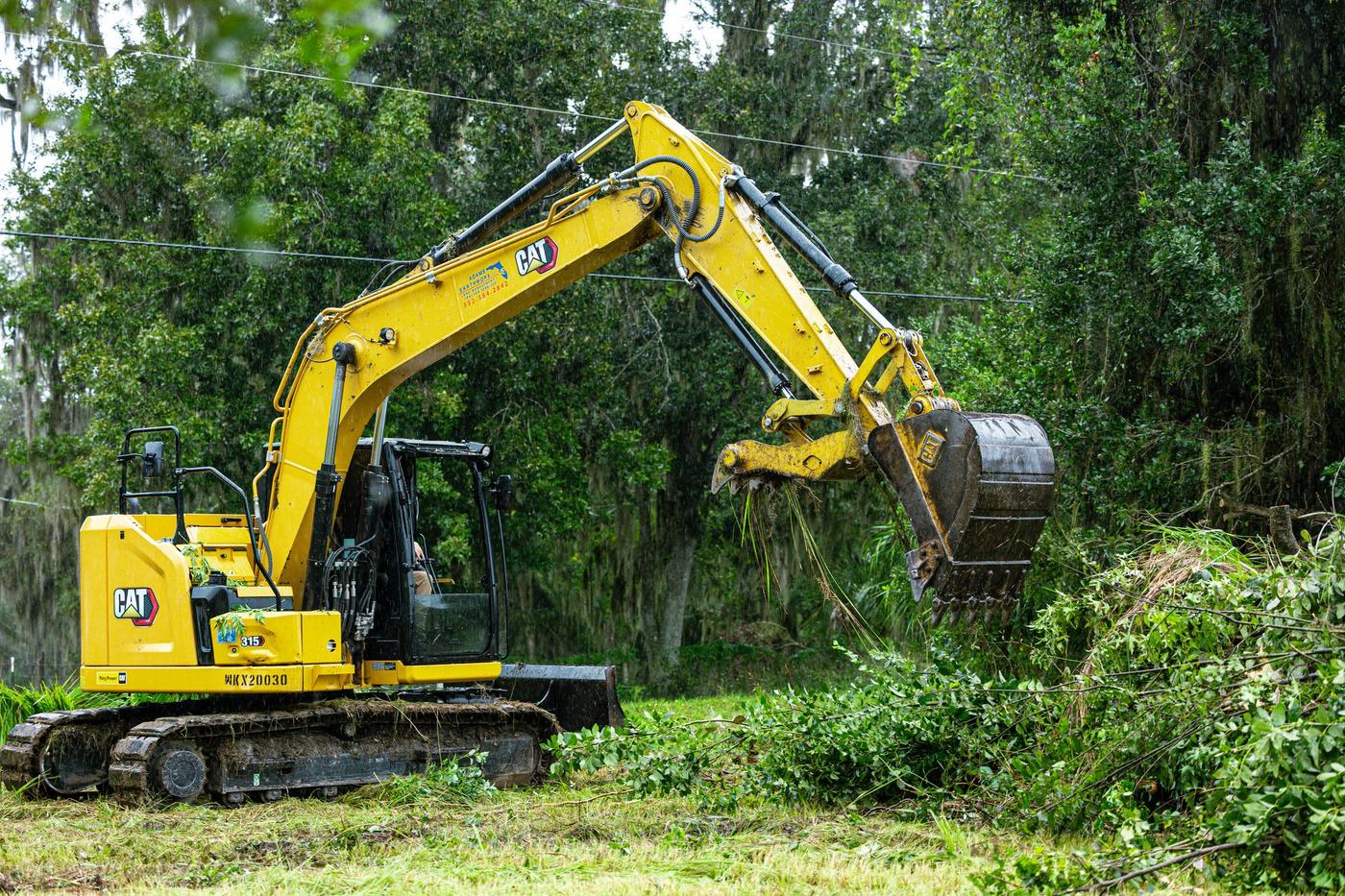
Why the roots matter: a stump cut flush still has a root ball under it. It rots out over a few wet seasons and leaves a soft pocket. A pier sitting over that pocket sinks, and the home goes out of level. Pulling the roots out with the excavator now is a lot less trouble than re-leveling a home later. The difference between clearing and grubbing has its own page.
Septic and well before the first tree
Most rural lots out here run on a private well and a septic tank. Those two have to sit well apart by state rule, and the drainfield needs its own patch of ground that nobody drives over. So the septic installer lays out those spots, the office that permits septic in your county reviews them, and only then does anyone shape a home spot. The home goes where they leave room for it.
Do it the other way around and you can end up with a cleared, graded home spot sitting right where the drainfield had to go. Then either the home moves or the dirt work gets done twice. Check with your county and your septic installer first, and bring their layout when Sam walks the property. Adams Earthworx does not install septic systems or wells; Sam clears and grades around the spots they mark.
Clear what the plan needs, keep the rest
A lot of folks buy wooded acreage because of the trees. There is no reason to flatten all of it for one home. Clear the footprints and leave the shade.
- Home area. Cleared and grubbed, with working room on every side for the installer and their equipment.
- Drive and turnaround. Cleared wide enough for the load, with limbs taken up high over the path.
- Septic area. Opened up to whatever the septic installer marks out, so their machine can get in.
- Everything else. Left standing unless you want it gone. Trees close to the home that would hang over the roof are worth talking about on the walk.
Stumps, roots and brush pulled from the home area don’t get buried there. They get piled or loaded into the dump truck and hauled off. Thick lots start with land clearing.
Getting water out from under
A manufactured home sits up off the ground with open space underneath. If the ground under it is a saucer, rain runs in and stays. Standing water under a home means damp, rot and soft dirt under the piers.
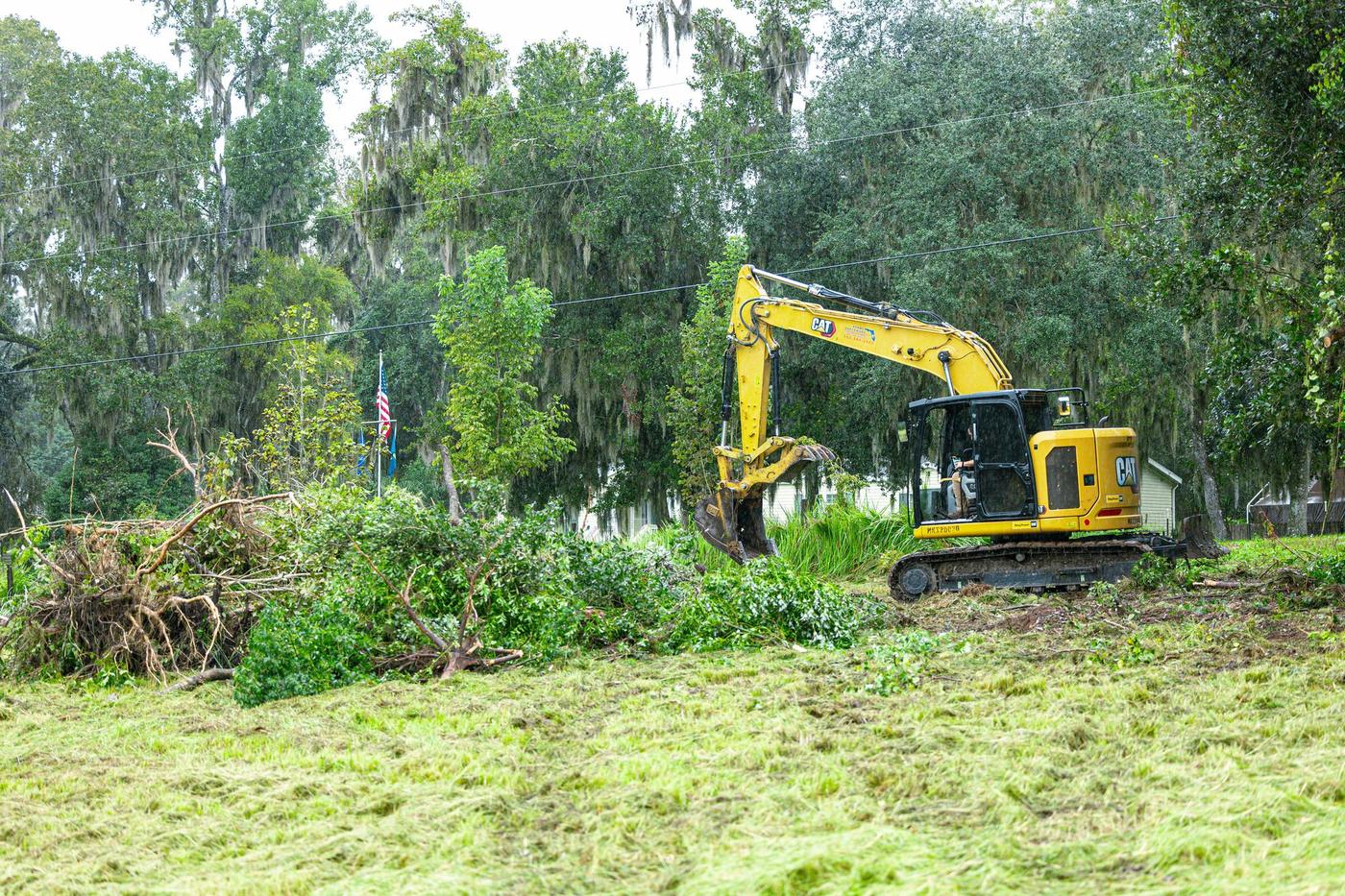
So after the grass and topsoil are scraped off, the blade shapes the home spot to fall off toward where the land already drains. On a flat Hernando or Citrus lot that might be a gentle fall toward the road ditch or a low corner. If a lot stays wet after every summer storm, Sam will look at where the water comes from before he decides how to move it. Bigger drainage fixes are covered under grading and site prep.
The drive and the delivery route
This is the part people forget until the toter is at the gate. A single home section is long, wide and low, and the truck pulling it does not turn like a pickup. A sandy two-track that has been fine for years can swallow a set of tires in one afternoon.
- Width. The cleared path has to be wider than the section, with room to spare for a driver who can’t see the edges.
- Turns. Every bend gets checked for swing. A long load cuts corners, so the inside of each turn needs open ground.
- Limbs overhead. Oak limbs that brush a pickup roof will catch a home section. They get taken up before the delivery day.
- Soft spots. Low wet places and loose sand get dug out where needed and built up with road base so the truck doesn’t sink.
- The road crossing. Where the drive meets the county road there is usually a swale, and that strip is often county right-of-way. A crossing that holds a car may not hold a loaded toter, and some need a culvert under the drive. Check with your county first, and bring it up when Sam walks the property.
- The turnaround. A spot beside the home where the truck can pull ahead, back in and get out again without tearing up the yard.
Ask your home dealer what their delivery driver needs for width and turns, and get that before the drive is built. The road base and the drive itself are on the driveways and road base page.
Who does what
Plain split, so nobody is waiting on the wrong person.
- Adams Earthworx. Clears, grubs, strips and grades the home area, opens the septic area, builds the drive and turnaround, and hauls off what comes out.
- Your installer. Sets the home, does the piers, blocking, leveling and anchors. Pier and anchor design is their call, not Sam’s.
- Your septic installer. Lays out and puts in the septic system. The well driller handles the well. Adams Earthworx does neither.
- The office that permits septic in your county. Reviews the septic site and handles the septic permit and inspection; in some counties that is the health department, in others the state. Check with your county and your septic installer first.
- Your county. Zoning, setbacks and whether a manufactured home is allowed on that lot at all. Deed restrictions can add more, so check the deed too.
Who this is for
The dealer already set a delivery date
Somebody else picked the day, and the ground has to be ready by it. Work backward: septic layout, then clearing and grading, then the drive, with a little slack left over for a rainy week.
Swapping an old single-wide for a newer home
The old home comes off, and the spot it sat on often holds water or old debris. A longer or multi-section replacement can also need wider turns than the drive has ever had to give.
A used home that has to move on a deadline
You bought a home that has to come off its current spot by a set date. Your lot needs to be ready first, or the home has nowhere to go.
Second home on family land
Placing a home for a parent or a grown kid on land the family already owns, or on a piece split off from it. The drive often has to branch off an existing one, and the delivery route is usually the tight part. Whether a second home is allowed there, your county decides.
Lot bought, home not picked yet
Good time to walk it. Knowing what the ground needs helps you pick where the home sits and what size section the route can take.
When you text Sam
Text (352) 584-2842. Sam replies the same day and the estimate is free. These help him give you a real answer:
- The survey or site plan. Even a phone photo of it.
- The home size. Number of sections and length, from the order.
- The septic layout, if the septic installer has marked it yet.
- A photo from the road. Showing where the drive would start and the ditch in front.
- Your delivery window. So the drive is done before the toter is.
If you’re the dealer or installer getting a customer’s lot ready, the same list applies. Text Sam the lot, the home size and the delivery window.
Then Sam walks the lot with you and you settle where the home, drive and turnaround go on the ground. One customer, Ethan W., put it this way: “Sam is extremely professional in his field and very knowledgeable.”
Related work: grading and site prep · land clearing · stumps, brush and grubbing · driveways and road base · driveway culverts · loader and dirt work · barndominium pad prep.
QUESTIONS
What has to be done to raw land before a mobile or manufactured home can be set on it?
The home area has to be cleared, grubbed of stumps and roots, and graded so water drains away, and the drive has to hold the delivery truck. On top of that, the septic and well spots get laid out first, and the route from the road gets checked for width, turns and limbs. Adams Earthworx in Brooksville does the clearing, grading and drive work; the installer does the setting.
Do the stumps and roots really have to come out under the home, or can the installer set the home over them?
They have to come out. Florida’s installation standards call for stumps, roots and other organic material to be removed from under the home, and roots left in the ground rot and leave soft spots under the piers. Your installer and the county inspector have the final word.
Should the septic and well spots be decided before any clearing or grading starts?
Yes, settle them first. The well and the drainfield have to sit well apart by state rule, so your septic installer lays out those spots, the office that permits septic in your county reviews them, and the home goes where they leave room. Check with your county and your septic installer first, and bring their layout when Sam walks the property.
Do I need to clear the whole lot, or just where the home, drive and septic go?
Just the home area, the drive and turnaround, and the septic area, unless you want more gone. Leave working room around the home and take limbs up over the drive. The rest of the trees can stay.
Will the delivery truck be able to get a long home section down my dirt drive, and what has to be fixed first?
It can if the drive is wide enough, the turns have room, the limbs are up and the soft spots are built up with road base. The swale crossing at the road often needs the most work, and it is usually county right-of-way, so check with your county first and bring it up when Sam walks the property. Ask your dealer what their driver needs, then send Sam a photo from the road.
My lot stays wet after a rain. How do you keep water from sitting under the home?
By shaping the home area so it falls toward where the land already drains, after the grass and topsoil are scraped off. Sometimes that is a gentle slope to the road ditch, sometimes it takes a swale. Sam looks at where the water comes from on the walk before deciding.
Does Sam set the home, pour piers or tie the anchors?
No, that is the installer’s work. Sam does the dirt: clearing, grubbing, grading, the drive and the turnaround. The piers, blocking, leveling and anchors belong to whoever sets the home.
Got a delivery date from the dealer? Text the date and a photo of the drive from the road to (352) 584-2842, and Sam will tell you what has to be done before the toter rolls in.