You closed on a commercial lot, or you are about to. Maybe it is for a shop, an office, a small storefront or a building for your contractor yard. The first thing you want is the trees gone. On a business parcel in Hernando, the first step is usually paperwork, and the machine comes after it. Adams Earthworx is Sam Adams, owner-operator out of Brooksville since 2016, doing commercial site work across Hernando, Pasco, Citrus and Marion counties. He runs the excavator on the commercial jobs he quotes: the clearing, the pond dig, the pad and the drive base. This page lays out the dirt side of a small commercial build in the order it usually goes, and who is responsible for each piece.
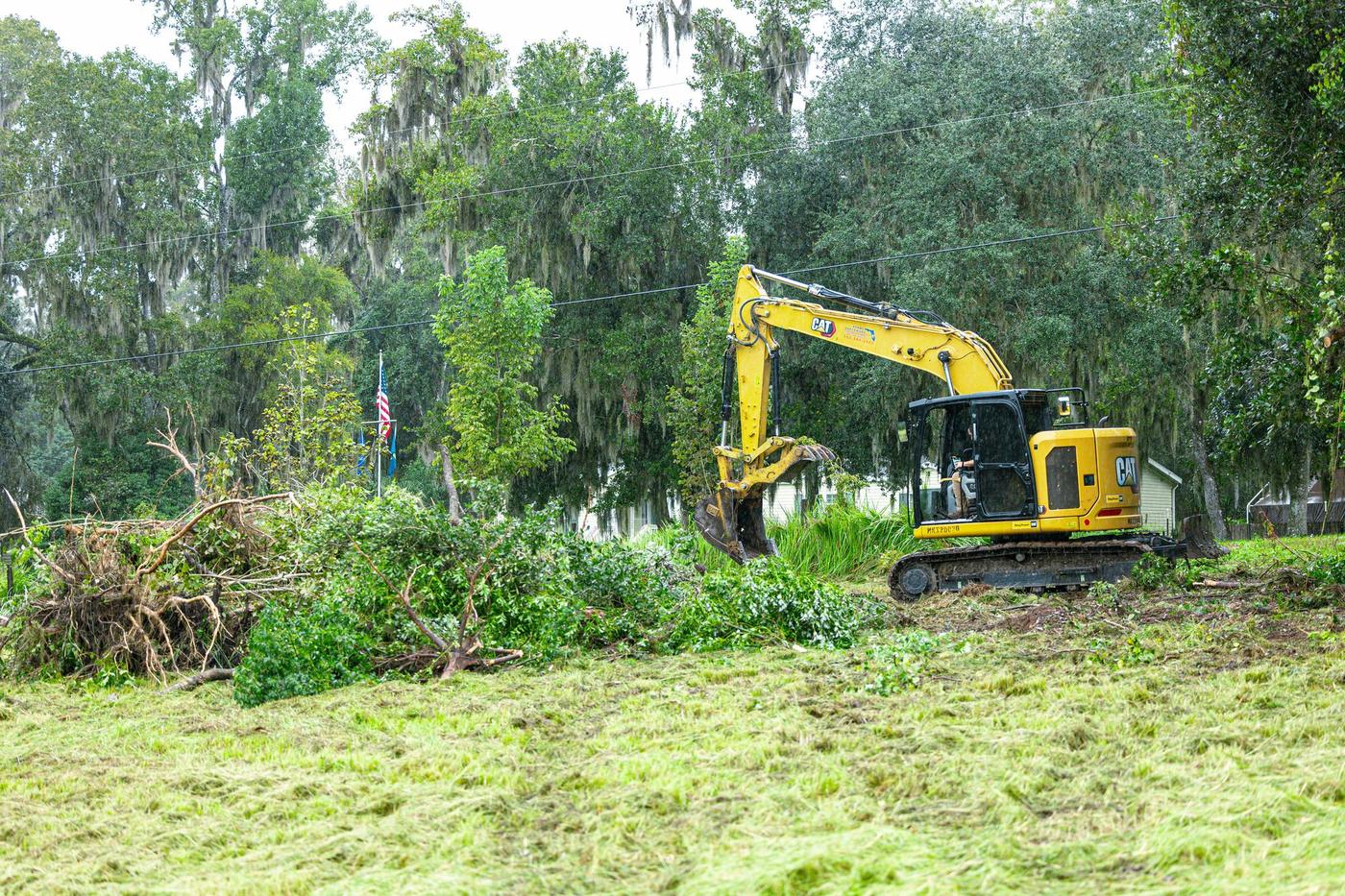
Why the clearing waits on the building permit
Homeowners can often clear a lot well ahead of a house. A commercial parcel in Hernando works differently. The county’s Development Services FAQ says commercial parcels cannot be cleared without an approved Vertical Construction Permit tied to the proposed development. The vertical permit is the building permit. So the trees stay up until the building has been approved.
The same FAQ ties the site permit to the building application. A Site Development Permit cannot be approved until a Vertical Construction Permit application has been submitted. Put those two lines together and the sequence looks like this: your engineer finishes the site plan, the building application goes in, the site permit can move, and clearing waits for the building approval.
That is the county’s rule as its own page states it today, and rules change. The rules quoted here are Hernando County’s; a parcel inside Brooksville city limits goes through the City instead. Whoever holds the permit pulls it. Check with the county first (or the City, inside city limits), and bring it up when Sam walks the property. What Sam can do is look at the lot early, read the plan, and have the machine ready for the day the approval comes through.
Who does which part
A small commercial job has more hands on it than a house pad. Most of the confusion comes from not knowing whose job a thing is. Here is how the roles usually split.
- Your engineer designs it. The site plan comes from a civil engineer: where the building sits, the pad elevation, the grades across the lot, the drive, and the size and shape of the pond. None of those numbers come from the machine operator.
- The permit holder pulls permits. That is you, your general contractor, or whoever your project names.
- An independent lab tests. Hernando’s Facility Design Guidelines call for testing of materials and construction by an independent lab, and they say the developer pays for that testing. The lab checks the fill and the base.
- The stakes tell the machine where to go. Grade stakes and layout come from the survey side of your project. Sam cuts, fills and shapes to those marks.
- Sam does the dirt. Clearing, digging the pond, moving dirt, building the pad and putting down the drive base, all to the plan and the stakes. The man who quotes the dirt work is the man in the seat when it happens.
The dry retention pond, in plain words
If your site plan has a low, grassy basin drawn on it, that is the stormwater pond. It is not optional. Hernando’s Facility Design Guidelines say all new developments have to provide a detention or retention system. A roof and a paved drive shed rain fast. The pond catches that water on your lot so it does not run onto the road or the neighbor.
If your plan labels it dry retention, the pond sits empty most of the time. After a storm it fills, and then it drains by soaking down into the ground. The county’s guidelines say percolation is the only outfall for dry retention systems. In plain words, there is no pipe carrying the water away. The sand under the pond is the drain.
Retention and detention are not the same. A retention pond keeps the water on site until it soaks in. A detention pond holds the water for a while and lets it out slowly through a built outlet to a ditch or pipe. Which one your lot gets, and how big, is the engineer’s call based on the soil and the site.
Digging a pond that has to drain
A pond that is supposed to soak away is dug with a different mindset than a pond meant to hold water. The goal is a bottom that still lets water through when the machine is done with it. As general practice, these are the things that matter on the dirt side. Your engineer’s plan and notes control the details.
- Dig to the plan elevations. The bottom and side slopes are drawn on the plan. Sam digs to them and checks against the stakes, rather than guessing at a depth on site.
- Keep the bottom open. Heavy equipment parked or turning on a finished pond bottom packs it tight. Clay or muck smeared across the bottom can seal it. Either one slows the soak.
- Don't use it as a dump spot. A pond bottom is not the place to stockpile fill, park the dump truck or bury brush. What sits there can choke it.
- Know what the spoil is for. The spoil (the dirt dug out of the pond) often has a use elsewhere on the site, if the engineer and the lab say it is suitable. If it isn’t, it gets loaded and hauled.
- Leave a way in. The county’s guidelines call for a drainage right-of-way at least 20 feet wide for access to a retention or detention facility. In practice, that means the plan leaves room for a mower or a machine to reach the pond later.
A farm or fishing pond you want to hold water year-round is a different job with different questions. That one is covered in the guide to digging a pond on the Nature Coast.
How the dirt work runs, first day to last
Every site is its own. On a typical small commercial lot, once the approval is in hand, the dirt side tends to go like this.
- Lines marked. Underground utilities get located before any digging, and anything buried that you know about gets pointed out.
- Clear and grub (pull the stumps and roots). Trees, brush and stumps come out of the areas the plan says to clear. See land clearing for how that part goes.
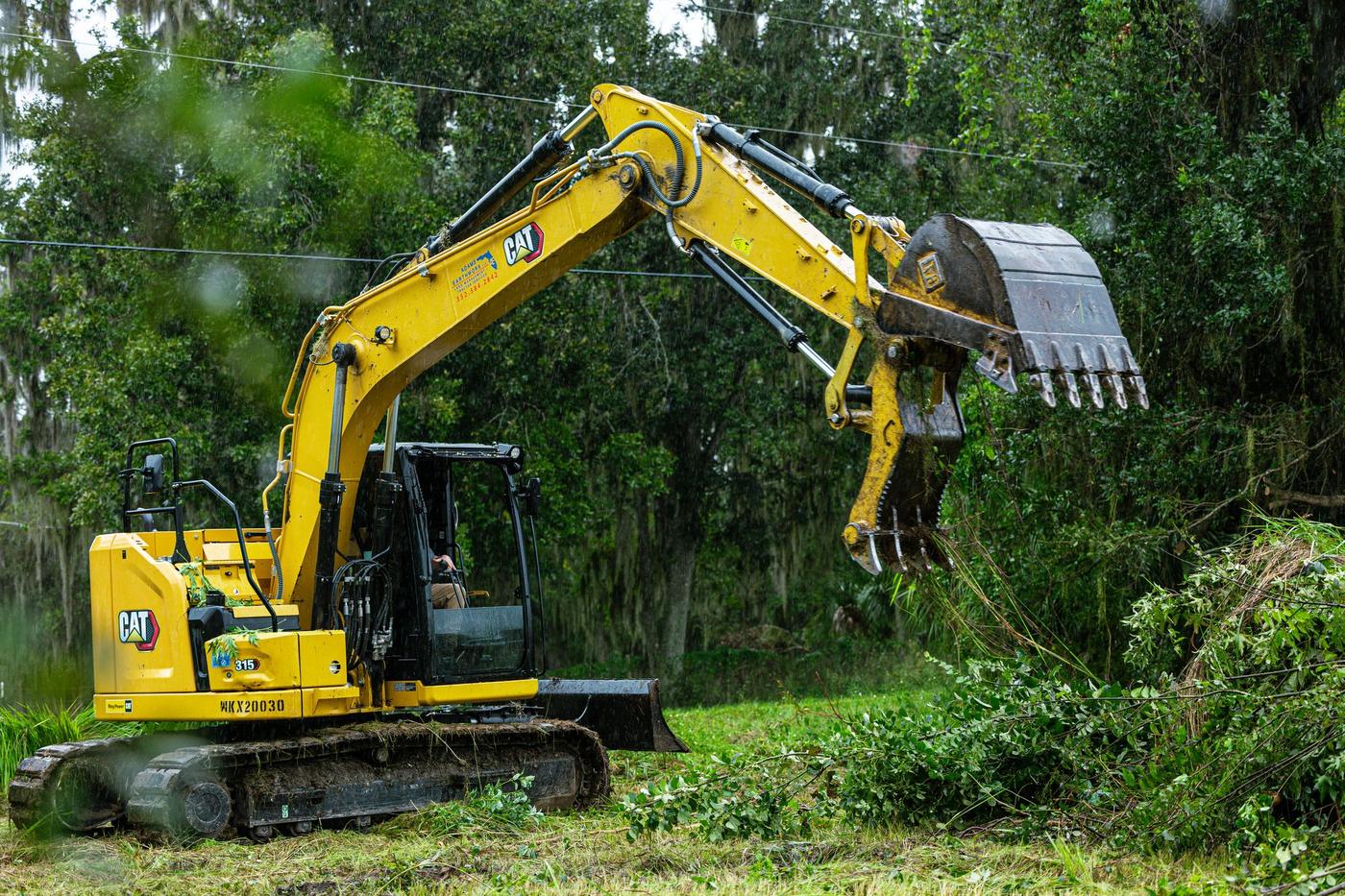
- Pond first, in most cases. The stormwater pond is often dug early so it is there to take water while the rest of the site is opened up. The plan and the engineer set the order.
- Cut and fill to grade. Dirt moves from the high spots to the low ones to match the plan elevations. That is the excavating and grading work.
- Build the pad. Fill goes in under the building and gets packed, and the lab checks it as it goes. The way a pad gets built in layers is on the pad prep before the slab page.
- Base for the drive and parking. Base material goes down where the plan shows the drive and parking, so concrete trucks and deliveries have firm ground. More on base material is on driveways and road base.
- Final shaping. The ground around the building, the pond banks and the swales (the shallow grassy ditches that carry water) get dressed to the plan so water heads where the engineer drew it.
Who this is for
You bought a parcel on the US 41 or SR 50 side of Brooksville
You want a shop or an office on it, and you want the lot cleared this month. Get the engineer started and the building application in. The clearing date follows the approval, so the earlier the plan is moving, the sooner the machine is. The rules on this page are Hernando County’s; if the parcel is inside Brooksville city limits it goes through the City, so check with whoever permits your parcel first, and bring it up when Sam walks the property.
You are putting a small building near US 19 or the Suncoast in Spring Hill
The plan you got back has a pond taking up a corner of the lot you thought was usable. That corner is where the roof and the parking drain to. It stays on the plan, and it has to be dug so it soaks, not just scooped.
You are a small builder doing a commercial job for a client
You need a dirt sub who reads the plan, digs to the stakes and works around the lab’s testing schedule. Sam answers his own phone and runs his own machine. See the Spring Hill commercial sitework page if that is your area.
Your lot is over the line in Pasco or Citrus
The Hernando rules on this page don’t carry over to another county. The order of the dirt work is about the same; the paperwork may not be. Check with your county first, and bring it up when Sam walks the property.
What happens when you text Sam
Text (352) 584-2842. Send the site plan if you have it, even a draft. Tell Sam where the permits stand: nothing filed yet, building application in, or approved. Add a few photos of the lot from the road and wherever a truck would come in.
Sam replies the same day. He reads the plan, walks the lot with you, and talks through the clearing, the pond, the pad and the drive base, plus where the spoil goes. Estimates are free. When the work starts, the man who walked it is the one running the excavator.
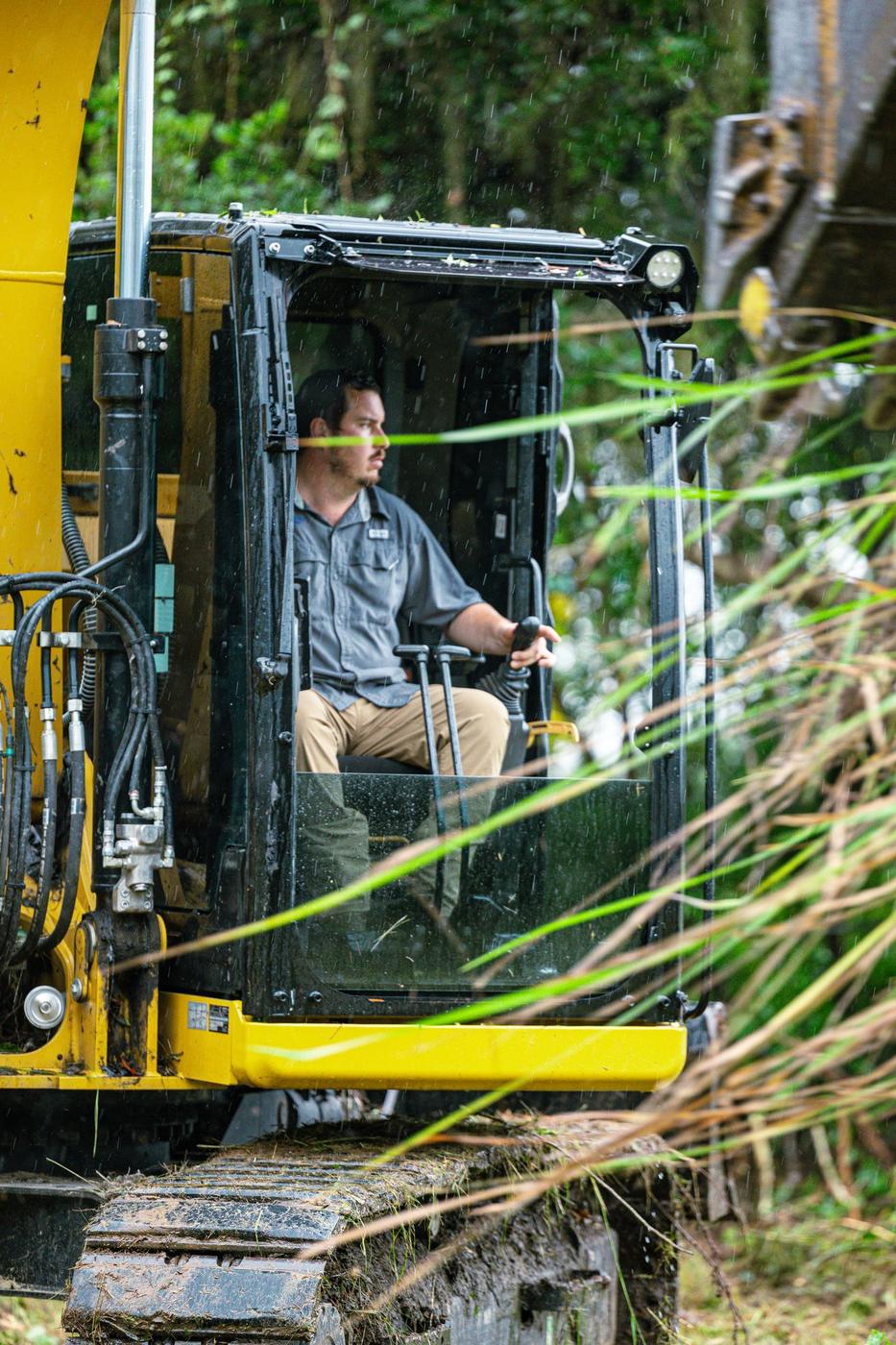
One job Sam can point to: Dade City subdivision entrance, 2026: cleared, cut, graded, based, and paved by one outfit. As Brooke P. wrote in a review: “Would definitely recommend this company! Sam is great at what he does.”
Related work: subdivision and commercial sitework · land clearing · excavating · grading and site prep · driveways and road base · digging a farm or fishing pond.
QUESTIONS
Can I get my commercial lot in Hernando cleared now, before the building permit is approved?
Usually not on a commercial parcel, because Hernando’s Development Services FAQ says commercial parcels cannot be cleared without an approved Vertical Construction Permit for the proposed development. Check with the county first, and bring it up when Sam walks the property.
What is a dry retention pond, and why is there one on my site plan?
A dry retention pond is a basin that stays empty most of the time, fills in a storm, and drains by soaking into the ground. Hernando’s Facility Design Guidelines require every new development to provide a detention or retention system, and they name percolation as the only outfall for dry retention. That is why the bottom has to be left able to drain.
What's the difference between a retention pond and a detention pond?
A retention pond keeps the stormwater on site until it soaks into the ground, while a detention pond holds it and lets it out slowly through an outlet. Which one your lot needs is decided by your engineer, not the dirt contractor.
Who designs the pond and the grades, and who does the digging?
Your civil engineer designs the pond and the grades, and Sam digs and grades to that plan and the stakes. Adams Earthworx does not design ponds or set elevations. It moves the dirt to match what the engineer drew.
Do I need a site development permit and a building permit, and which comes first?
On a Hernando commercial job, the site development permit can’t be approved until the building (vertical construction) permit application has been submitted. That is what the county’s Development Services FAQ says. Whoever holds the permits on your project handles them; check with the county for your parcel.
Who does the density and compaction testing, and who pays for it?
An independent testing lab does it, and Hernando’s Facility Design Guidelines say the developer pays for testing of materials and construction. Adams Earthworx builds the pad and base; the lab checks them.
Can one outfit do the clearing, the pond, the pad and the driveway base?
Yes, Adams Earthworx does all four with its own excavator, blade work, skid steer and dump truck.
Bought a commercial lot and not sure what comes first? Text the site plan and a few photos to (352) 584-2842, or call Sam, and he will walk it with you.