You own a vacant lot in Hernando, Citrus or Pasco County, and you live in Ohio, or Tampa, or just across town. The last time anybody looked, it was mowed. One Florida summer later it won’t be. Adams Earthworx is Sam Adams, owner-operator out of Brooksville since 2016, and he runs the tractor and bush hog himself. This page covers keeping a lot that is already open under the county’s grass-height line. If your lot is still woods and you want a house on it, that is clearing a wooded lot to build.
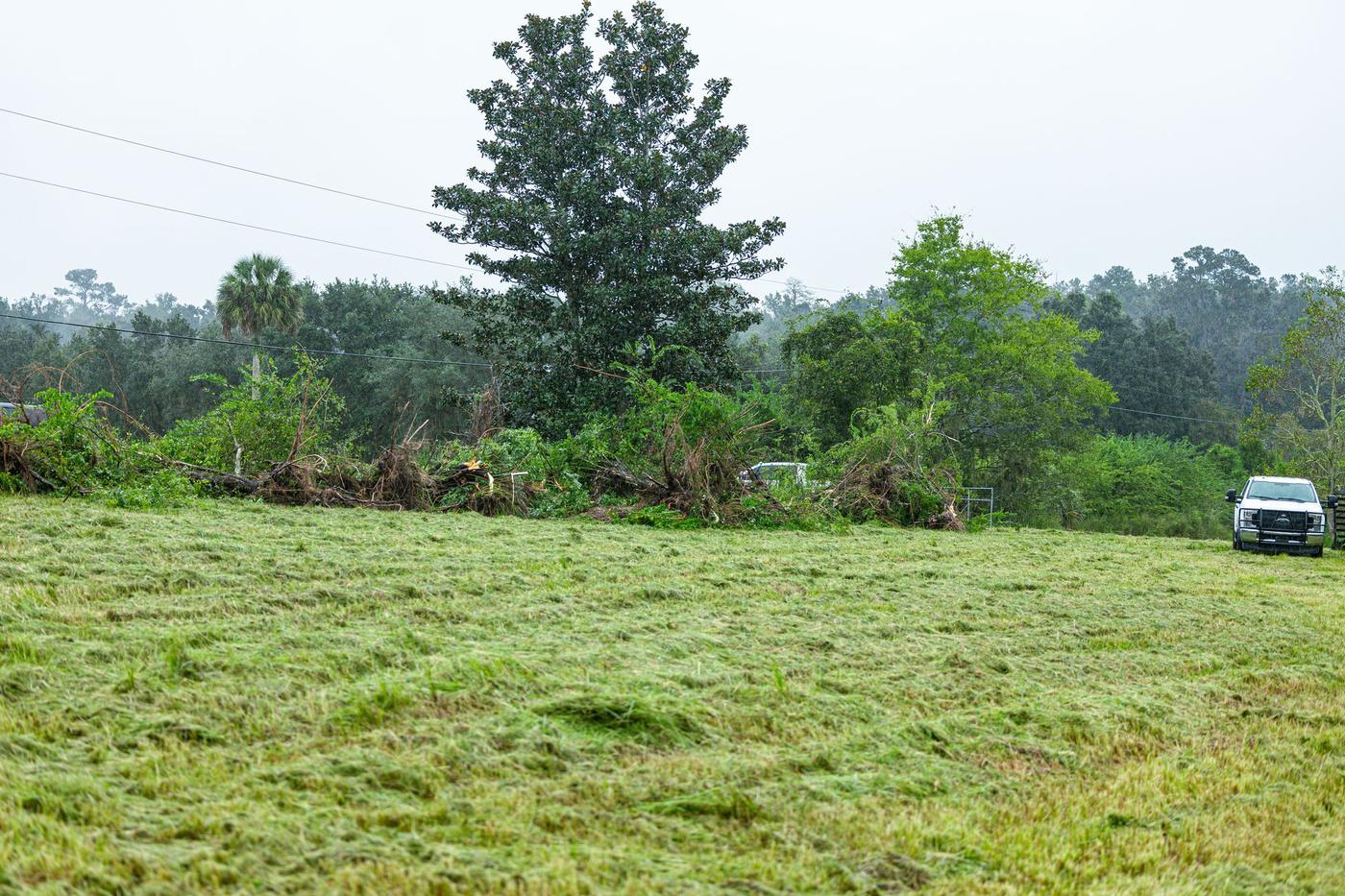
How tall is too tall, county by county
There is no single Florida number. Each county writes its own, and the line moves when you cross from one to the next. Here is what each county’s own pages say, in plain words.
- Hernando: 18 inches. Hernando’s code says grass and weeds can’t top 18 inches, measured within 100 feet of any improved property, meaning a lot with a house or building on it. Seed heads sticking up above the grass aren’t counted in the height. Agricultural and conservation zonings are left out of the rule (the county lists A/R, A/R1, A/R2 and County 2.5 among them).
- Citrus: 12 inches. Citrus’s land development code draws a lower line: nothing in the way of grass, weeds or undergrowth over 12 inches above grade, on any lot within 500 feet of a built home, in areas set aside for residential or commercial use. Trees, shrubs and hedges don’t count. 500 feet is several lot-widths, so in a subdivision with houses scattered among empty lots, like Citrus Springs or Beverly Hills, many empty lots fall inside it. More on that county under bushhogging in Citrus County.
- Pasco: its own section. Pasco’s code has a section of its own on overgrown property, Section 42-1. We don’t print a height for Pasco here because we couldn’t confirm the current figure from the county’s own copy. Call Pasco Code Compliance and ask for the number that applies to your parcel. If your lot is out toward Hudson, see bushhogging in Hudson.
Notice the two distances. Hernando measures from 100 feet out; Citrus reaches 500 feet. A lot that is fine in one county can be in violation a few miles north. Zoning matters too, so look up yours on the county’s parcel search. Check with your county first. The number changes at the county line.
Woods are left alone, a cleared lot is on the clock
Here is the rule owners almost never hear about. Hernando’s Development Services FAQ says unimproved lots that have never been cleared are not required to be maintained. Put simply, a lot that is still standing timber isn’t held to the 18-inch rule. Nobody expects you to mow a forest.
The other side of that is what catches people. Once a lot has been cleared, or bush hogged down into a grassy field, it is no longer never-cleared. It is on the clock from then on, every growing season, whether or not anybody builds on it.
So the day the trees come off is the day the mowing starts. That is one more reason the guide to clearing a lot for a house says to wait until you have a plan and a builder. A lot opened up three years early is three summers of cutting. Whether your particular lot counts as never-cleared is the county’s call, so confirm its status with Hernando before you lean on the exemption. Citrus and Pasco write their own rules; ask them directly.
How a code case usually starts
Most of the time, a neighbor calls, and under Florida law they have to give a name and an address. A code case can’t start from an anonymous tip (F.S. 162.06(1)(b)), and that law applies in every county, not just the one where we found it quoted. There is an exception for real safety hazards. Hernando says its officers are expected to start looking into a complaint within 10 business days.
Think about what that means if you live away. The person deciding whether your lot gets reported is the one who lives beside it, sees it every morning, and has to mow around the snakes and the seed coming over the line. Lots out in the middle of nowhere rarely draw a call. Lots between two built houses do, and the county’s 100-foot and 500-foot distances point at the same lots.
Pasco’s county records describe what happens if a notice gets ignored. Once the written notice runs out without the lot being fixed, the county can send someone to clear it, and the bill for that work becomes a lien on the land. That lien rides with the parcel until it is paid, including when you try to sell. Regular mowing doesn’t make a case go away, and nobody can promise that it will. What it does is keep the grass under the height the county measures.
First cut, then a rhythm
A lot that sat for a couple of summers isn’t a lawn mower job anymore. Head-high grass, dog fennel and finger-thick saplings will choke a push mower and bounce a riding one. That first pass is what a tractor and bush hog are built for. The cutter drops it all to a few inches and chops it up so it lies down.
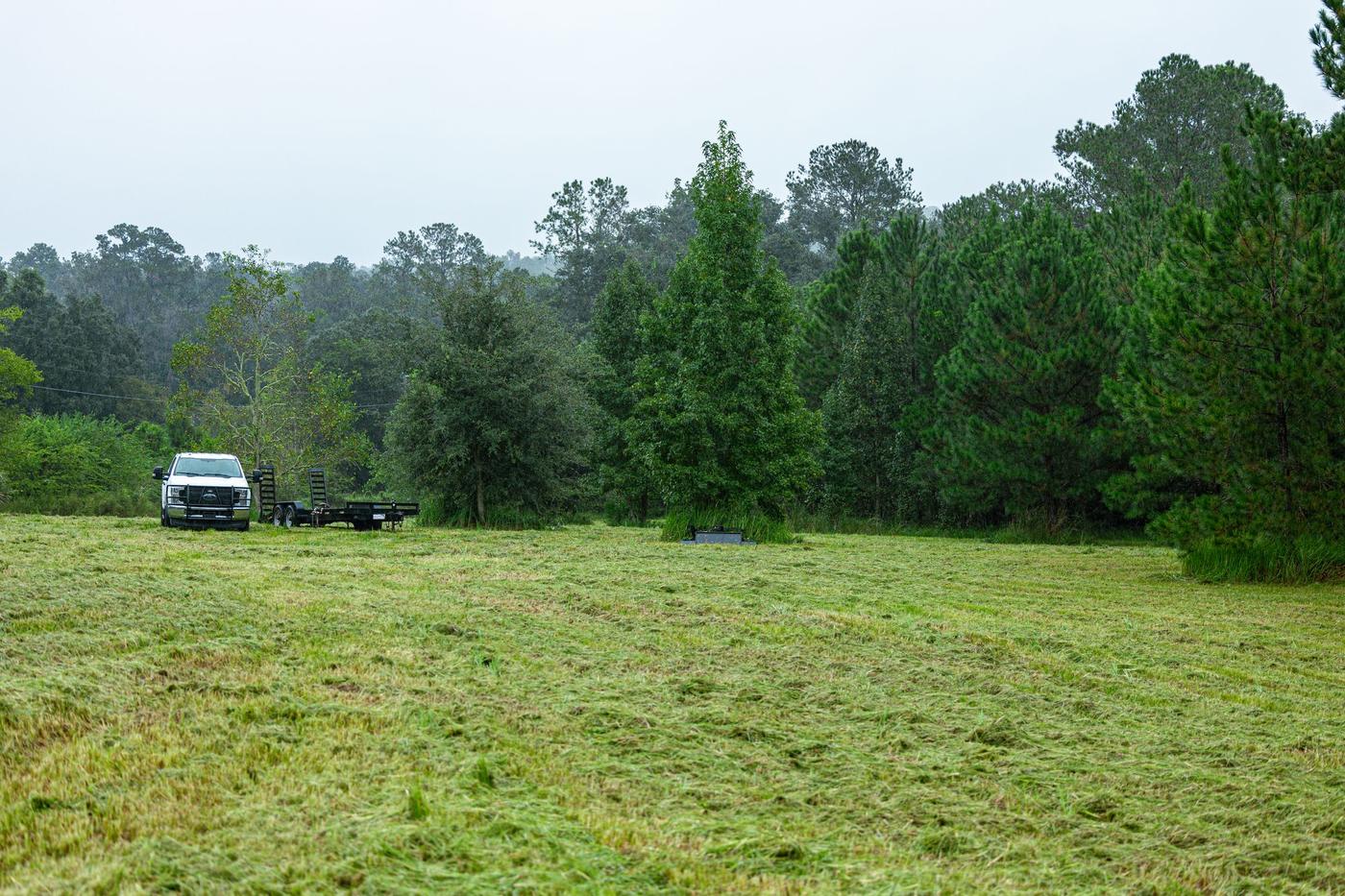
The bush hog doesn’t do everything. The strip along a fence, the area around a mailbox post, the road swale out front, and the trunks of trees you want to keep get done by hand with trimmers and pole saws. That is where most lots look ragged after a quick mow, and it is the part a neighbor notices.
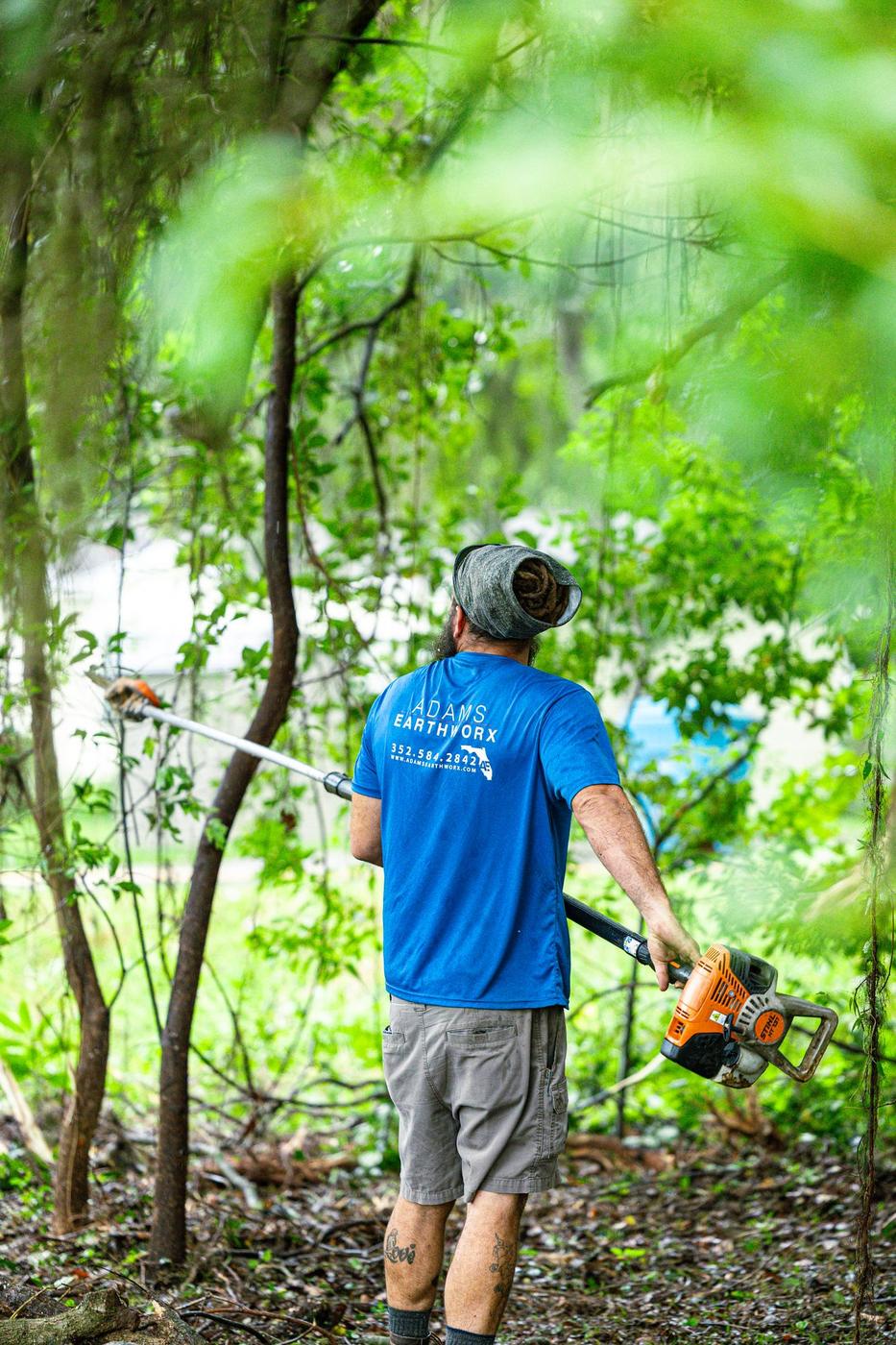
After the first cut it turns into a schedule. The rainy summer months grow grass fast, so the lot needs cutting more often then, and the dry months stretch the gaps out. There is no one interval that fits every lot. Sam suggests one once he has seen what grows on yours and how quickly. Keeping it under the line on a schedule beats cutting it after a letter shows up. If the lot has grown back into real saplings, that is land clearing, not mowing. If you own open acreage rather than a subdivision lot, read first cut vs. keeping acreage mowed.
Mowing a lot you can't stand on
You don’t have to fly down for any of this. A few things sent ahead make the difference between a lot mowed to your lines and a lot mowed partway into the neighbor’s yard.
- Parcel number and survey or plat. Subdivision lots look alike from the road. The parcel number and a drawing of the lines tell Sam which rectangle is yours and where it stops.
- What's in the ground. Survey stakes, a well cap, a septic lid if somebody started a build: anything low and easy to hit in tall grass. Say so, even if you’re not sure.
- Trees you want kept. A young oak in the middle of the lot looks a lot like a weed tree from the tractor seat. Point out the keepers.
- Dumped junk. Empty lots collect tires, old furniture and yard waste from people passing by. Tell Sam where it sits. Hauling it off is a separate item from mowing, and it is better to know that up front.
- Ask for photos. Before and after, sent by text, so you can see the lot was done without driving past it.
Who texts about this
You inherited the lot and then got a letter
A parent bought it decades ago for retirement. Now it’s yours, you’ve never stood on it, and code compliance has written to you about the grass. Start with the parcel number and the letter.
You're putting it up for sale
Your realtor says it won’t show the way it looks. Buyers need to see a lot, not a thicket, and to walk to the corner stakes.
You bought it to build in a few years
You’re not ready for a house yet. Keeping it cut until then is a lot easier than letting it go and paying for a bigger first cut later.
A neighbor sent you a photo
No letter yet, just a text from the people next door. That text is often the step before a complaint.
It was cleared once and grew back
Somebody opened it years ago and walked away. Now it’s grass and saplings, and in Hernando it likely doesn’t count as never-cleared anymore; the county makes that call.
What happens when you text Sam
Text the parcel number or the street address to (352) 584-2842. If you have the county’s letter or the neighbor’s photo, send that too. Sam replies the same day.
Then he drives out, looks the lot over, and texts back what he found: how tall it is, what’s growing, whether there’s junk to haul, and anything near the lines to watch. The first cut and a regular schedule get estimated as two separate items, so you can decide on each. Estimates are free, and you don’t have to be there. Ethan W. said it in his review: Sam is extremely professional in his field and very knowledgeable.
Live close enough to see the property yourself and just need a one-time cut? See bushhogging, or bushhogging in Spring Hill if that’s where it sits.
Related work: bushhogging · land clearing · clearing a wooded lot to build · overgrown pasture first cuts · bushhogging in Hudson · bushhogging in Inverness.
QUESTIONS
How tall can grass get on a vacant lot before the county steps in?
Hernando’s code says 18 inches within 100 feet of improved property (a lot with a house or building on it), and Citrus’s code says 12 inches on lots within 500 feet of a built home. Hernando leaves agricultural and conservation zonings out of the rule, and Citrus’s rule covers residential and commercial areas. For Pasco, call Code Compliance for the current number. Wherever the lot sits, check with your county first.
Do I have to mow my vacant lot if it's still all woods?
In Hernando, usually not: the county’s FAQ says unimproved lots that have never been cleared are not required to be maintained. Once the lot has been cleared or mowed into a field, the height rule applies. Citrus and Pasco write their own rules, so ask them, and confirm your lot’s status with the county.
Can a bush hog cut grass and weeds that are over my head?
Yes, that is the job it is built for. A tractor and bush hog take head-high grass, weeds and light brush down to a few inches on the first pass. Edges along fences and around trees get trimmed by hand. Saplings with real trunks may be a clearing job instead, and Sam tells you which when he sees the lot.
How often does a vacant lot need to be mowed in Florida?
More often in the rainy summer and less in the dry months. There is no fixed interval that fits every lot, so Sam sets a schedule after he sees what grows on yours. The goal is to stay under the county’s height line all season, not to cut after a letter arrives.
I live out of state. Can you mow my lot without me being there?
Yes, Sam can mow your lot without you there. Text the parcel number and the survey or plat, point out stakes, lids or trees to avoid, and ask for before-and-after photos by text. You don’t need to be there for the estimate either.
Who reports an overgrown lot, and can they do it anonymously?
Usually it’s a neighbor, and under Florida law they can’t stay anonymous. F.S. 162.06(1)(b) says a code case can’t start from an anonymous complaint, so the person reporting gives a name and address; there is an exception when the inspector believes there is an imminent threat to public health, safety or welfare, or to habitat or sensitive resources. Hernando, whose FAQ quotes the law, says its officers are expected to start looking within 10 business days.
What happens if I ignore the letter about my overgrown lot?
In Pasco, county records show the county can clear the lot itself once the written notice runs out, and the bill for that becomes a lien on the land. Other counties have their own process, so call the office that sent the letter. Mowing doesn’t close a case, but it keeps the lot under the height the county measures.
Text the parcel number to (352) 584-2842 and Sam will go look at the lot and text you back what it needs.